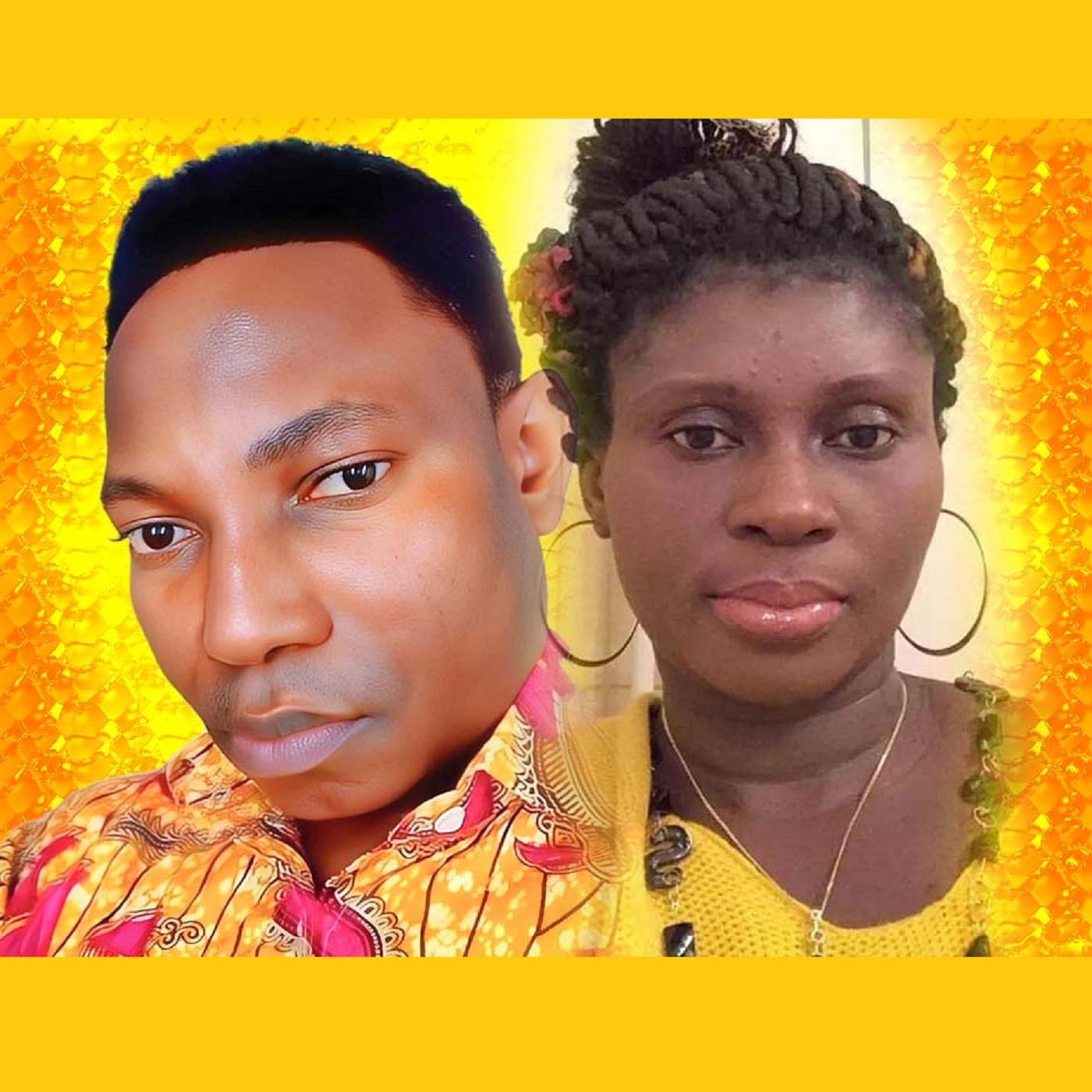
In a recent development within the Ghanaian gospel music industry, OFM Computer World Europe, a subsidiary of Multi Debrich Group Ltd Ghana, has initiated legal proceedings against renowned gospel artist Esther Smith.
The company alleges that Esther Smith owes over $240,000, representing a 40% share of revenues from digital stores, as stipulated in their contractual agreement. Additionally, the percentage from YouTube earnings is yet to be calculated.
Background of the Dispute
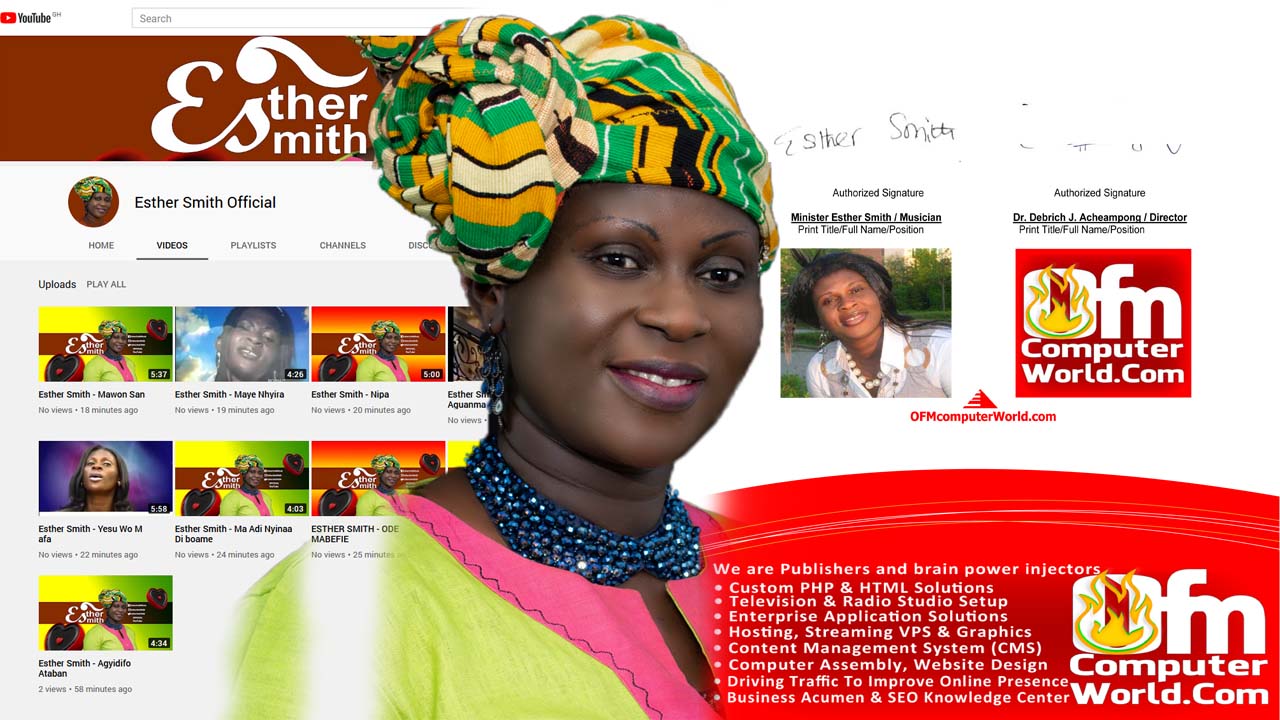
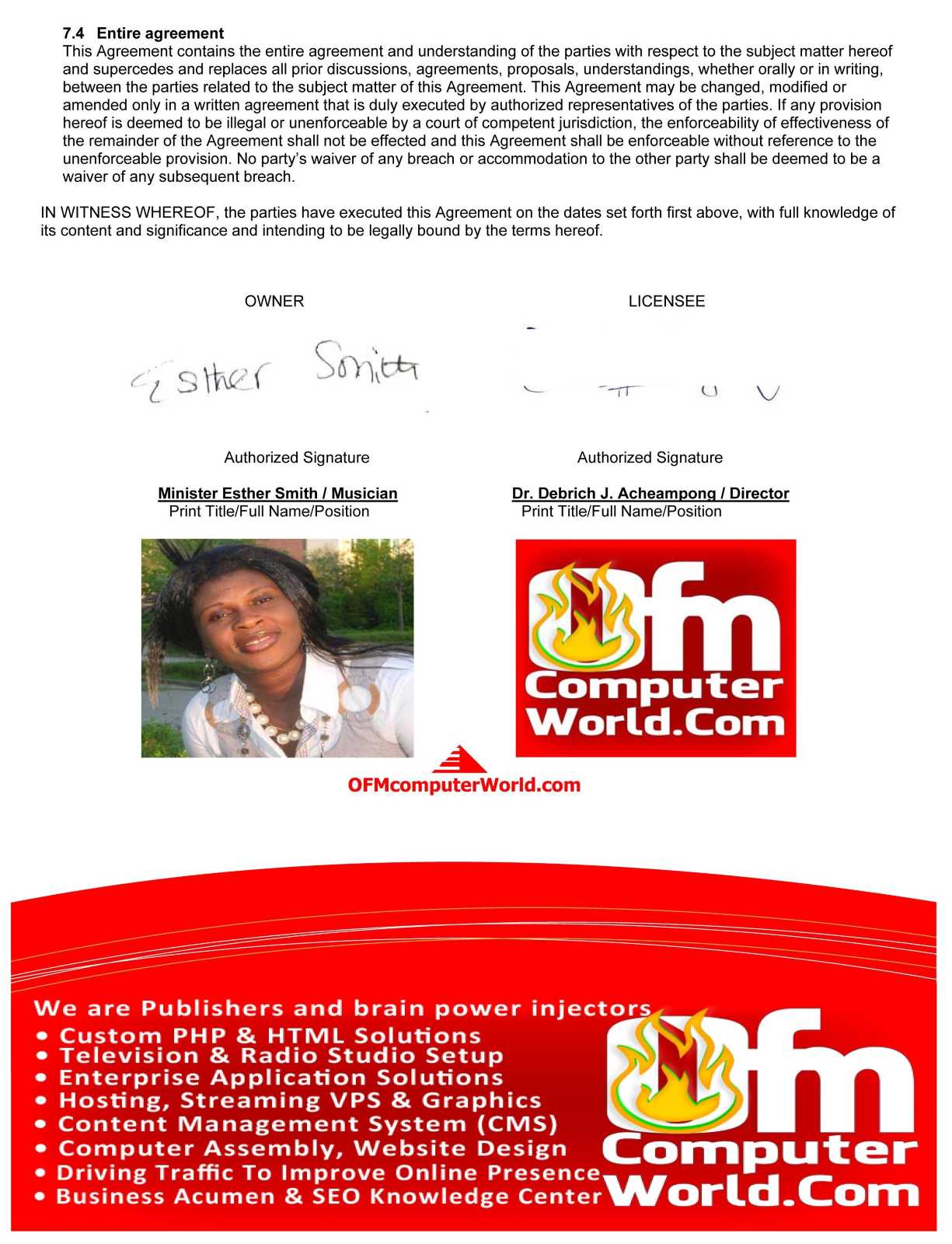
On July 12, 2020, OFM Computer World, under the leadership of Dr. Debrich Jeremiah Acheampong, established the YouTube channel EstherSmithMusic to promote Esther Smith’s gospel music career. This initiative was built upon the domain esthersmith.org, which remains under the company’s control. A legally binding agreement, signed by Smith on June 16, 2020, recognized OFM Computer World as the rightful creator and manager of the channel, entrusting them with its technical and promotional management.
However, without prior consultation or consent, Smith unilaterally altered the channel’s password and recovery email, effectively excluding the original creators and managers. This action has raised significant legal and ethical concerns regarding contractual obligations and digital rights.
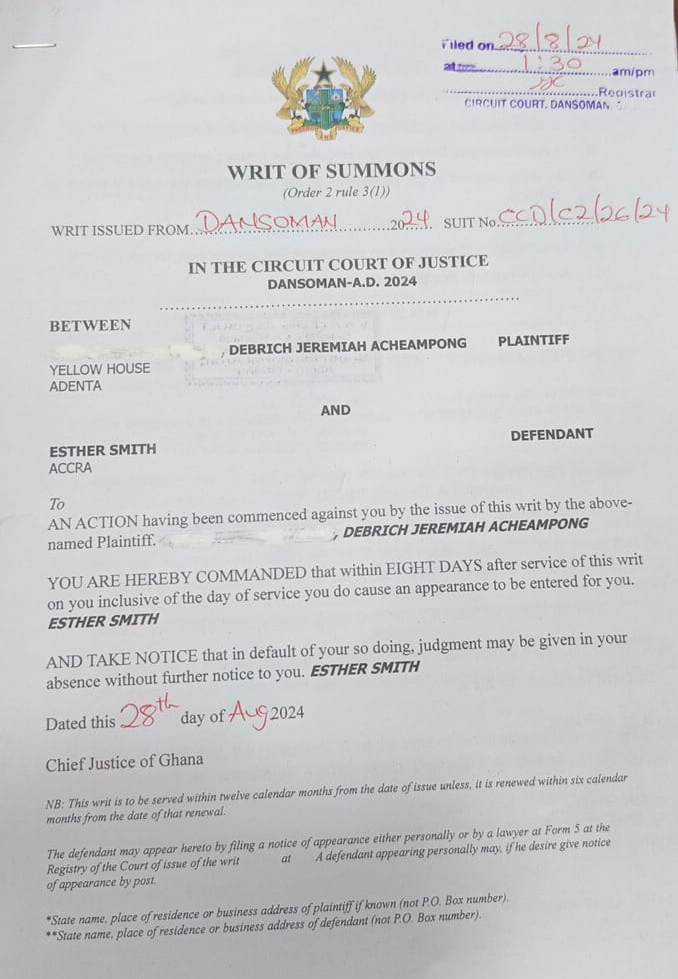
Esther Smith Court case (Suit No. CCD/C2/26/24)
Legal Proceedings and YouTube Intervention
In response to the unauthorized takeover, OFM Computer World has formally petitioned YouTube Support to review the channel’s ownership. The company has provided:
The original signed agreement between OFM Computer World and Esther Smith.
A copy of Smith’s German National ID for identity verification.
Official proof of the channel’s creation under the Gmail username esthersmithorg, linked to the domain esthersmith.org.
Legal documentation from the Dansoman Court in Accra, confirming the case is under judicial review.
Evidence of OFM Computer World’s active management of the channel prior to the unauthorized access change.
The company has also escalated the matter to Google’s Legal Support Team, seeking intervention to restore rightful ownership and ensure adherence to digital media agreements.
Implications for Digital Content Ownership in the Music Industry
This case underscores critical issues surrounding digital content ownership and management rights in the entertainment industry. Many artists rely on digital platforms such as YouTube for revenue generation, promotions, and audience engagement. However, disputes over ownership can arise when clear contractual agreements are not honored.
Dr. Debrich Jeremiah Acheampong, CEO of OFM Computer World Europe and Multi Debrich Group Ltd Ghana, emphasized the importance of protecting digital assets and intellectual property:
“Digital content management is a serious business. Companies invest time, expertise, and financial resources into building online platforms for artists. Unauthorized takeovers not only violate agreements but also undermine trust in the industry. This case is about ensuring that contractual obligations are honored and digital rights are protected.”
Call for Industry-Wide Regulations
OFM Computer World is urging stakeholders in the music and entertainment industry to establish clearer regulations governing digital content ownership and management. The company calls on:
Music labels and managers to enforce stricter agreements regarding online platforms.
Artists to honor contractual obligations and seek proper legal consultation before making unauthorized changes.
Tech companies like YouTube and Google to enhance their dispute resolution mechanisms to prevent digital hijacking cases.
Looking Ahead
As the legal case proceeds, OFM Computer World remains committed to reclaiming the EstherSmithMusic channel and ensuring justice is served. The company also advises businesses and artists to establish strong digital content policies to prevent similar disputes. OFM Computer World is confident that justice will prevail and that YouTube will take appropriate action to restore rightful ownership of the channel.
This ongoing dispute serves as a pivotal moment for the African entertainment industry, highlighting the necessity for clear agreements and the protection of digital rights in an increasingly digital world.
OFM COMPUTER WORLD to reclaim ESTHER SMITH’S YouTube Channel
OFM COMPUTER WORLD, a subsidiary of MULTI DEBRICH GROUP LTD, has taken decisive legal action to reclaim ownership of the YouTube channel @EstherSmithMusic, originally created and managed by the company for UK-based Ghanaian gospel artist Esther Smith.
The dispute, now a legal matter in the Dansoman Court in Accra, Ghana (Suit No. CCD/C2/26/24), highlights critical issues surrounding digital content ownership and management rights in the entertainment industry.
Esther Smith Court case (Suit No. CCD/C2/26/24)
Background of the Dispute
On July 12, 2020, OFM COMPUTER WORLD, under the leadership of Dr. Debrich Jeremiah Acheampong, officially created the YouTube channel @EstherSmithMusic to support and promote Esther Smith’s gospel music career. The channel was built on the domain esthersmith.org, which remains under the control of OFM COMPUTER WORLD.
A legally binding agreement, signed by Esther Smith on June 16, 2020, acknowledges the role of OFM COMPUTER WORLD as the channel’s rightful creator and manager. The agreement, backed by Esther Smith’s German National ID, outlines the company’s responsibility for technical and promotional management of the digital platform.
However, without prior consultation or consent, Esther Smith unilaterally changed the channel’s password and recovery email, effectively locking out the original creators and managers. This action has raised serious legal and ethical concerns regarding contractual obligations and digital rights.
Legal Proceedings and YouTube Intervention
To address the unauthorized takeover, OFM COMPUTER WORLD – MULTI DEBRICH GROUP LTD has formally petitioned YouTube Support to review the ownership of the channel. The company has submitted:
The original signed agreement between OFM COMPUTER WORLD and Esther Smith.
A copy of her German National ID for identity verification.
Official proof of the channel’s creation under the Gmail username esthersmithorg, derived from the domain esthersmith.org (which remains under OFM COMPUTER WORLD’s control).
Legal documentation from the Dansoman Court in Accra, proving the case is under judicial review.
Evidence of OFM COMPUTER WORLD’s active management of the channel before the unauthorized access change.
The company has also escalated the case to Google’s Legal Support Team, seeking intervention to restore rightful ownership and ensure compliance with digital media agreements.
The original signed agreement between OFM COMPUTER WORLD and Esther Smith
Impact on Digital Content Ownership in the Music Industry
This case sets a significant precedent for digital media management within the African entertainment industry. Many artists rely on digital platforms such as YouTube for revenue generation, promotions, and audience engagement. However, disputes over ownership often arise when clear contractual agreements are not respected.
Dr. Debrich Jeremiah Acheampong, CEO of OFM COMPUTER WORLD Europe and MULTI DEBRICH GROUP LTD Ghana, emphasized the importance of protecting digital assets and intellectual property:
“Digital content management is a serious business. Companies invest time, expertise, and financial resources into building online platforms for artists. Unauthorized takeovers not only violate agreements but also undermine trust in the industry. This case is about ensuring that contractual obligations are honored and digital rights are protected.”
Call for Industry-Wide Regulations
OFM COMPUTER WORLD urges stakeholders in the music and entertainment industry to establish clearer regulations governing digital content ownership and management. The company calls on:
Music labels and managers to enforce stricter agreements regarding online platforms.
Artists to honor contractual obligations and seek proper legal consultation before making unauthorized changes.
Tech companies like YouTube and Google to enhance their dispute resolution mechanisms to prevent digital hijacking cases.
What’s Next?
As the legal case proceeds, OFM COMPUTER WORLD remains committed to reclaiming the @EstherSmithMusic channel and ensuring justice is served. The company also advises businesses and artists to establish strong digital content policies to prevent similar disputes.
OFM COMPUTER WORLD is confident that justice will prevail and that YouTube will take appropriate action to restore rightful ownership of the channel.
OFM COMPUTER WORLD EUROPE MULTI DEBRICH GROUP LTD GHANA
Website: OFMcomputerWorld.com
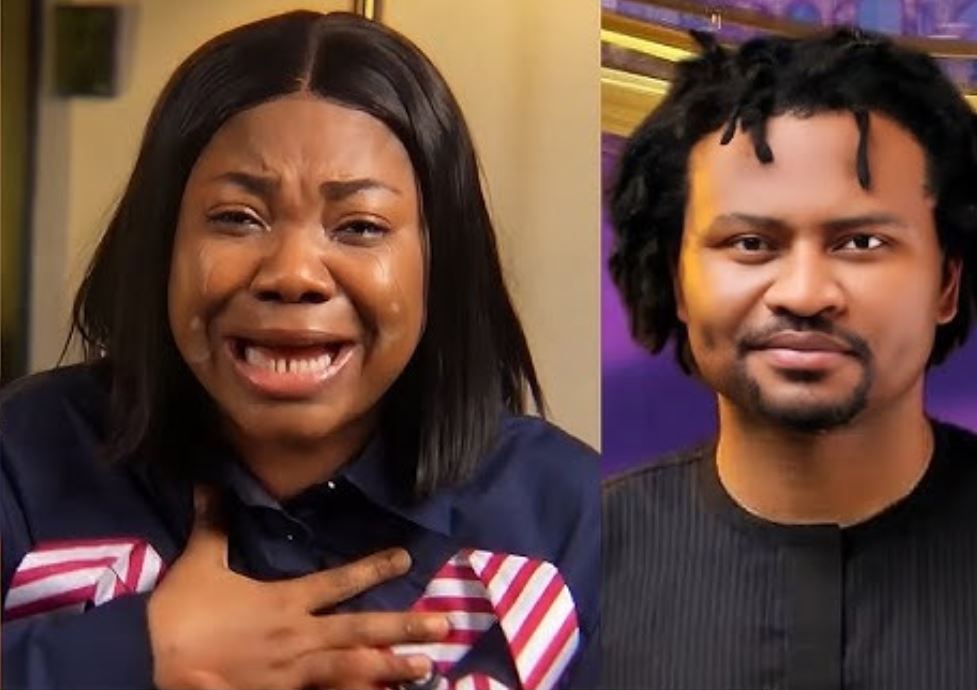
Mercy Chinwo and EeZee Conceptz Boss, Ezekiel ThankGod
LAGOS NIGERIA: The ongoing dispute between renowned gospel artist Mercy Chinwo and her former manager, Ezekiel ThankGod (popularly known as Eezeetee), has garnered significant public attention.
The conflict centers on allegations of financial mismanagement, contractual breaches, and defamation.
Initiation of Legal Proceedings
Contrary to widespread reports, Mercy Chinwo did not initiate legal action against Ezekiel ThankGod. In a statement released on January 25, 2025, she clarified that it was Ezekiel who first approached the court. She emphasized that she had not filed any lawsuit regarding her music catalogue.
EFCC’s Involvement and Court Proceedings
The Economic and Financial Crimes Commission (EFCC) became involved following allegations that Ezekiel misappropriated funds by failing to remit Chinwo’s share of earnings. He is accused of retaining $260,494 in the EEZEE GLOBAL MINISTRY Zenith Bank account, funds that allegedly belong to Mercy Chinwo and fellow gospel artist Judith Kanayo (Judikay). Ezekiel faces a three-count charge related to money laundering and diversion of funds. The Federal High Court in Lagos has scheduled his arraignment for February 14, 2025.
Mercy Chinwo’s Response
In a heartfelt video shared on social media, Mercy Chinwo accused Ezekiel of sponsoring false rumors about her family. She alleged that he paid bloggers to spread misinformation, including claims questioning the paternity of her newborn son. Chinwo described her relationship with Ezekiel as toxic and controlling, stating that his actions forced her to relocate from Port Harcourt to Lagos.
Industry Reactions and Calls for Mediation
The dispute has elicited reactions from industry stakeholders. Efe Omorogbe, a renowned talent manager, emphasized the importance of respecting contractual agreements and resolving disputes through negotiation rather than coercion. He highlighted that master rights typically belong to record labels and can only be transferred through a negotiated buyout.
Additionally, there have been appeals for organizations like the Pentecostal Fellowship of Nigeria (PFN) and the Christian Association of Nigeria (CAN) to mediate in the dispute, given the prominent positions of the individuals involved in the gospel music community.
Finally, as the legal proceedings progress, the gospel music community and the public await further developments. The situation underscores the complexities that can arise in professional relationships within the music industry, highlighting the need for clear contracts, transparent dealings, and effective conflict resolution mechanisms.
For more insights into EeZee Conceptz’s perspective on the allegations, you can watch their official response below:
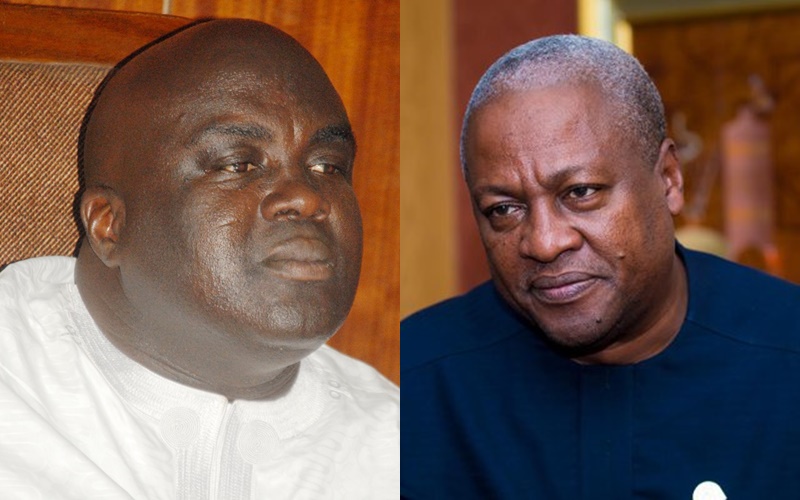
Mr. Julius Debrah appointed by President John Mahama
In a significant political development, President John Dramani Mahama has appointed Mr. Julius Debrah as the Chief of Staff. The announcement underscores the President’s confidence in Mr. Debrah’s leadership capabilities and his track record of public service. This pivotal appointment places Mr. Debrah in a strategic position to coordinate and oversee the effective functioning of the Office of the President as well as facilitate government policy implementation.
Julius Debrah: A Profile of Excellence
Julius Debrah is a seasoned administrator, politician, and entrepreneur whose career spans both public service and private enterprise. Born on April 4, 1966, in Obomeng-Kwahu in the Eastern Region of Ghana, Mr. Debrah’s life is marked by a commitment to excellence and service.
Education
Mr. Debrah began his Secondary education at Mpraeso Secondar School and A-Level at Achimota School, where he distinguished himself academically and socially. He later pursued higher education at the University of Ghana, Legon, earning a degree in Archaeology and Sociology. His educational background provided a solid foundation for his career in public administration and politics.
Professional Career
Julius Debrah’s career trajectory is a testament to his versatility and leadership skills. He began his professional life as an entrepreneur, establishing businesses that created jobs and contributed to the Ghanaian economy. His private-sector experience equipped him with managerial and organizational skills that have been instrumental in his public service roles.
In the realm of public service, Mr. Debrah has held various high-profile positions:
Eastern Regional Minister: His tenure was marked by developmental initiatives and efforts to enhance the region’s economic and social infrastructure.
Greater Accra Regional Minister: Mr. Debrah’s leadership in the nation’s capital region earned him widespread praise for fostering community development and enhancing urban management.
Minister for Local Government and Rural Development: In this role, he championed decentralization and policies aimed at empowering local governance structures.
Political Career
As a member of the National Democratic Congress (NDC), Julius Debrah has been a key figure in the party’s organizational and campaign strategies. His deep understanding of grassroots politics and ability to connect with diverse constituencies have made him an asset to the party and a trusted ally of President Mahama.
Achievements and Recognition
Throughout his career, Mr. Debrah has been celebrated for his commitment to transparency, efficiency, and inclusive governance. His efforts have not only strengthened institutions but also uplifted communities across Ghana. Colleagues and stakeholders consistently commend his work ethic, dedication, and ability to inspire others.
Strategic Role as Chief of Staff
As Chief of Staff, Julius Debrah is expected to bring his wealth of experience and innovative approach to the President’s Office. His responsibilities will include managing the President’s schedule, liaising with ministers and government agencies, and ensuring the smooth execution of government programs. Given his impressive credentials and previous successes, there is widespread optimism about his capacity to excel in this role.
President John Mahama’s appointment of Julius Debrah as Chief of Staff is a strategic decision that reflects the administration’s commitment to effective governance. With his extensive experience, strong leadership skills, and a proven track record, Mr. Debrah is poised to play a crucial role in advancing the President’s agenda and promoting national development.
Ghana Elections 2024, John Mahama Triumphs Over Bawumia
On December 7, 2024, Ghanaians headed to the polls in a historic election that saw John Dramani Mahama of the National Democratic Congress (NDC) reclaim the presidency, defeating Dr. Mahamudu Bawumia of the New Patriotic Party (NPP). This marks Mahama’s return to power after a keenly contested race and his final term under Ghana’s constitution.
Presidential Results Approximate
According to Multi DebrichGroup.com analyst, Mahama secured approximately 58.48% (3,180,172) of the votes, defeating Dr. Bawumia, who garnered about 40.89% (2,223,277). Independent candidates and minor party representatives collectively accounted for the remaining votes. Mahama’s victory was particularly significant as he won major regions like Greater Accra, Central, Volta, and Northern, among others. Bawumia retained strongholds in the Ashanti region, and North East regions, reflecting the deep regional divides in Ghana’s political landscape.
A Peaceful Transition
Dr. Bawumia gracefully conceded defeat before the official declaration by the Electoral Commission, emphasizing the importance of peace and democracy. He congratulated Mahama and pledged to support a smooth transition, reinforcing Ghana’s reputation for political stability and democratic maturity.
Parliamentary Results
The NDC also made significant gains in the parliamentary elections, winning around 102 seats out of 275 as of time of writing, compared to the NPP’s 40 seats. This outcome positions the NDC for a commanding majority in the next Parliament. Key battleground regions, such as Western and Bono East, tilted decisively in favor of the NDC, consolidating their legislative influence. Meanwhile, a few constituencies remain closely contested, with results pending in 29 seats.
List of confirmed provisional winners of 2024 Ghana Parliamentary Election Results
– Agnes Naa Momo Lartey (NDC) retained her Krowor Constituency seat with 39,198 votes, defeating the NPP’s Emmanuel Laryea Odai, who polled 23,116 votes.
– Oti Bless (NDC) secured his fourth term as MP for Nkwanta-North with 25,402 votes against Mr Nador’s 22,733 votes.
– Alhassan Suhuyini (NDC) was re-elected as MP for Tamale North, polling 28,521 votes over his opponent’s 12,317 votes.
– Samuel Atta Mills (NDC) retained the Komenda-Edina-Eguafo-Abrem (KEEA) seat with 30,220 votes, ahead of the NPP’s Dennis Percyval Quaicoe, who garnered 17,675 votes.
– Ibrahim Mutala Mohammed (NDC) won Tamale Central with a commanding 52,263 votes, defeating the NPP’s Sule Salifu, who secured 16,647 votes.
– Rashid Pelpuo (NDC) retained the Wa Central seat with 38,579 votes, beating the NPP’s Hajia Humu Awudu, who obtained 30,724 votes.
– Zanetor Agyemang-Rawlings (NDC) was re-elected in Klottey Korle, garnering 39,700 votes over NPP rival Valentino Nii Noi Nortey, who received 23,558 votes.
Key Gains by the NDC
– Emelia Ankomah (NDC) made history by flipping the traditionally NPP-held Upper Denkyira East seat, securing 24,426 votes against Dr Awuah Kwofie’s 18,895 votes.
– Felix Ofosu Kwakye (NDC) claimed the Abura-Asebu-Kwamankese seat with 30,607 votes, defeating Eric Kobina Nyanteh (NPP), who polled 19,598 votes.
– Godwin Animli Dorgbadzi Dorani (NDC) unseated veteran MP KT Hammond in Adansi Asokwa with 14,229 votes. Hammond received 13,275 votes.
– Rev Kweku Addo (NDC) triumphed over incumbent Ursula Owusu-Ekuful in Ablekuma West, polling 31,866 votes to her 26,575. – Abdul Rauf Tongym Tubazu (NDC) claimed Ayawaso Central with 29,755 votes, defeating NPP’s Henry Quartey, who garnered 23,345 votes.
– Okle Felix Akwetey (NDC) won Bortianor Ngleshie Amanfro with 37,473 votes, ahead of Sylvester Tetteh (NPP), who secured 27,888 votes.
– Rachel Owusuaa (NDC) narrowly defeated Twum Barimah (NPP) in Dormaa East, polling 12,310 votes to his 12,050 votes.
– Prince Ebenezer Arhin (NDC) unseated Ophelia Mensah Hayford in Mfantseman with 35,832 votes.
NPP holds ground in Tano North
– Gideon Boako (NPP) successfully retained the Tano North seat for the NPP, garnering 21,127 votes over the NDC’s Pious Opoku.
Below are some other winners;
– Ahmed Ibrahim of the NDC retained the Banda seat with 9,150 votes, defeating Joe Danquah of the NPP, who garnered 8,010 votes.
– Alfred Kotey Ashie of the NDC won the Odododiodioo Constituency, securing 38,473 votes against Abdul Mannaf Sowah of the NPP, who polled 24,877 votes.
– Dr Kurt Nawaane of the NDC successfully defended the Nabdam seat with 11,192 votes, defeating Charles T. Ndanbon of the NPP, who obtained 6,680 votes.
– Charles Asiedu of the NDC unseated Benjamin Yeboah Sekyere of the NPP in the Tano South Constituency, securing 20,595 votes to Sekyere’s 18,697.
– Blay Nyameke Armah of the NDC claimed victory in Sekondi with 14,558 votes, ousting Tourism Minister Andrew Kofi Egyapa Mercer of the NPP, who polled 11,084 votes.
– George Kweku Ricketts-Hagan of the NDC retained the Cape Coast South seat with 21,277 votes, defeating Ernest Arthur of the NPP, who garnered 14,163 votes.
– Ohene Kwame Frimpong, an independent candidate and owner of Agogo Salt FM, defeated Andy Appiah-Kubi of the NPP in Asante Akyem North, polling 26,926 votes to Appiah-Kubi’s 8,933.
– Dr Dominic Ayine of the NDC retained the Bolgatanga East seat with 12,002 votes, beating Mathew Silas Amoah of the NPP, who received 7,415 votes.
– Rita Naa Odoley Sowah of the NDC held onto the La Dadekotopon seat with 16,976 votes, defeating Joseph Addo of the NPP, who secured 8,410 votes.
– Kojo Oppong Nkrumah of the NPP retained the Ofoase Ayirebi seat with 18,601 votes, surpassing Alfred Osei-Poku of the NDC, who polled 13,415 votes.
– Nurein Shiabu Migyimah of the NDC won the Assin Central seat with 16,343 votes, defeating Godfred Anewu of the NPP, who garnered 15,926 votes.
– Seid Mubarak of the NDC won the Sunyani East seat, defeating incumbent Kwasi Ameyaw-Cheremeh of the NPP. Mubarak secured 34,453 votes, while Ameyaw-Cheremeh polled 22,306 votes. The declaration faced delays, compelling the Electoral Commission to intervene.
– Michael Okyere Baafi retained the New Juaben South seat for the NPP, securing 32,134 votes to defeat Dr. Martin Otu Offei of the NDC, who garnered 23,735 votes.
– Finance Minister Dr. Mohammed Amin Adams of the NPP retained the Karaga seat with 28,155 votes, defeating the NDC’s Sualihu Alhassan Dandawa, who polled 22,409 votes.
– Sammi Awuku of the NPP won the Akuapim North seat, securing 28,365 votes to defeat the NDC’s John Evans Kumordzi, who polled 14,217 votes. Awuku, the Director General of the National Lottery Authority, marked his first parliamentary victory with this commanding win.
– The National Democratic Congress (NDC) parliamentary candidate Phillis Naa Koryoo Okunnor wins the Awutu Senya East Constituency seat pipping the incumbent Mavis Hawa Koomson. Naa Koryoo secured 50,886 votes, defeating Hawa Koomson, who garnered 46,638 votes.
– The National Democratic Congress (NDC) parliamentary candidate for the Adentan Constituency, Mohammed Adamu Ramadan has joined the political history makers as the first MP to retain the seat successfully. In an emphatic win, Ramadan polled 56,303 to beat the New Patriotic Party (NPP) candidate, Akosua Asaa Manu, who polled 35,143 to retain the seat he first won in 2020.
– Incumbent Member of Parliament for Okaikwei Central, Patrick Yaw Boamah of the NPP retained his seat following a fiercely contested election in the 2024 polls. Boamah, got 20,229 votes to hold onto the constituency edging his main contender, Abdulai Abu Baba Abubakar Sadiq of the National Democratic Congress (NDC) who amassed 18,783 votes.
– Sedem Kweku Afenyo of the NDC wins the Amansaman constituency with 53,759 votes, Yahya Kassim Atta of the NPP – his closest challenger amassed 39,525 votes.
– Jerry Ahmed Shaib of the NPP has been declared Member of Parliament-elect for the Weija-Gbawe Constituency, securing 32,608 votes against NDC’s Felix Odartey Lamptey, who garnered 30,460 votes.
– Samuel Okudzeto Ablakwa of the NDC retains the North Tongu constituency with 41,073 votes, Dr. John Savior Eleblu Yao came second with 3,035 votes.
– Mr Fred Agbenyo, the National Democratic Congress (NDC) Parliamentary Candidate for the Guan Constituency of the Oti Region, has been elected as the Member of Parliament. He polled 9,963 votes to beat Michael Osibo, the New Patriotic Party (NPP) Candidate, and Madam Sussie Sekor, National Democratic Party (NDP) Candidate who polled 2,998 and 82 votes, respectively.
– Mr Kwame Dzudzorli Gakpey (NDC), the incumbent Member of Parliament (MP) for Keta constituency in the Volta Region, has retained the Keta parliamentary seat for the next four years. The NDC MP gathered 29,471 votes to beat his contender Mr Hope Courage Goldberg-Grimm Leketey of the New Patriotic Party (NPP), who also polled 2,850 during the parliamentary election in the constituency.
– Jean-Marie Formadi, the NDC Parliamentary Candidate for the Biakoye Constituency in the Oti Region, has won the Seat for the Party. She polled 17,760 valid votes, representing 63.7 per cent as against 9,696 votes, representing 34.8 per cent secured by Dr. Frank Yirenkyi, of the New Patriotic Party (NPP) while Paul Kwesi Demends, the Liberal Party of Ghana (LPG) garnered 97 votes.
– Incumbent Member of Parliament (MP) Alexander Hotordze of the NDC emerged victorious in the Central Tongu constituency parliamentary election. Mr Hotordze secured 25,437 votes, maintaining his seat for the third consecutive term.
– Mr. Geoffrey Kini (NDC), the incumbent Member of Parliament for Nkwanta South Constituency in the Oti Region, has retained his seat. Mr. Kini obtained a total of 26,385 votes against his contestant, Madam Sherifa Sekyere-Tijani, the parliamentary candidate for the NPP, who obtained 18,385 votes.
– The incumbent MP Abla Dzifa Gomashie, on the ticket of the NDC in the Ketu South Constituency retained her seat with 78,902 votes. The former NPP Constituency Chairman and former Presiding Member of the Ketu South Municipal Assembly, Wisdom Petit Samuel Doe Haligah came second with 6,033 votes.
– Madam Faustina Elikplim Akurugu, the Parliamentary Candidate for the National Democratic Congress (NDC), has emerged victorious in the Dome Kwabenya parliamentary race, unseating the New Patriotic Party’s (NPP) candidate, Mike Oquaye Jnr. Akurugu was declared the winner by the Electoral Commission after she secured 51,634 votes, edging out Oquaye Jnr, who garnered 50,477 votes.
Significance and Outlook
This election marked a rare moment in Ghana’s Fourth Republic, with both major presidential candidates hailing from the northern regions. Mahama’s return to power is seen as a mandate for change amid rising economic challenges. His administration faces high expectations to address economic instability and foster national unity. The NPP, while disappointed, has vowed to regroup and hold the new government accountable.
These results underscore Ghana’s vibrant democratic process, with robust participation and peaceful resolution despite high stakes.
As Ghana approaches its much-anticipated 2024 general elections, the nation once again stands at the threshold of democracy’s dynamic crossroads.
This election season, brimming with significance, highlights Ghana’s democratic maturity and the unity of purpose that defines the country.
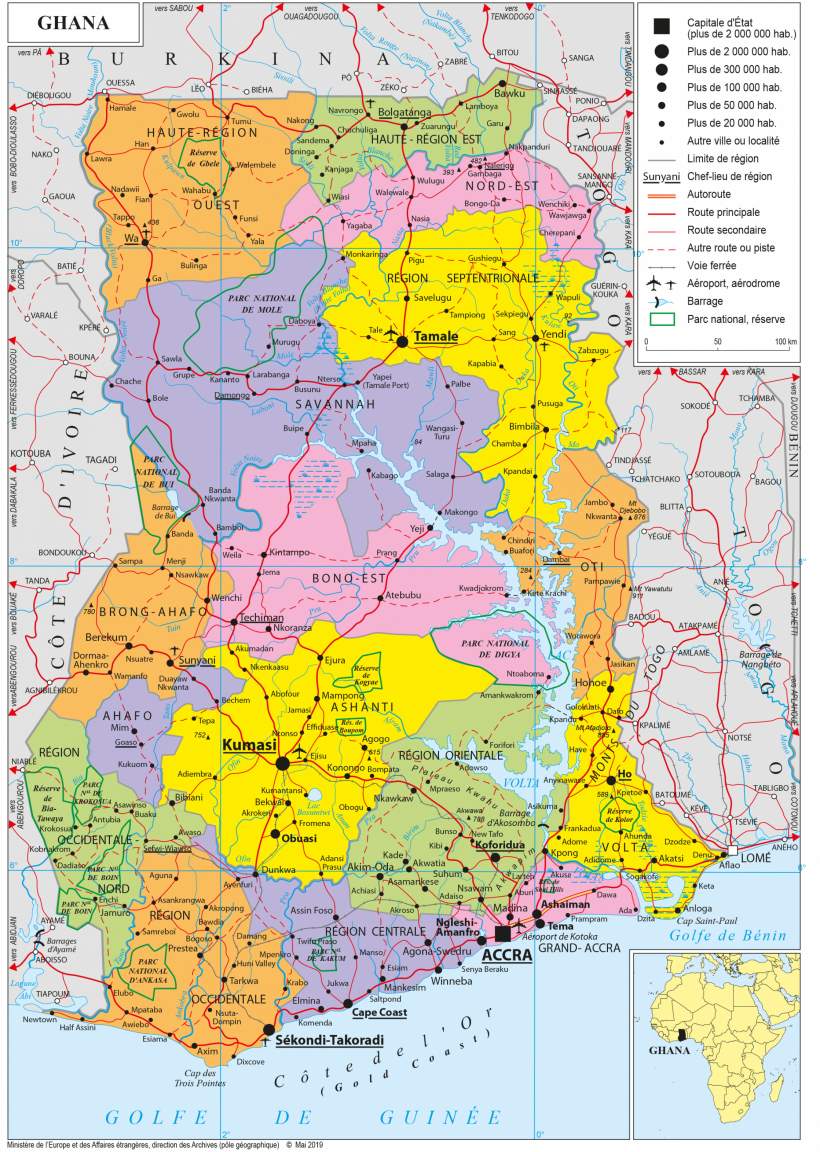
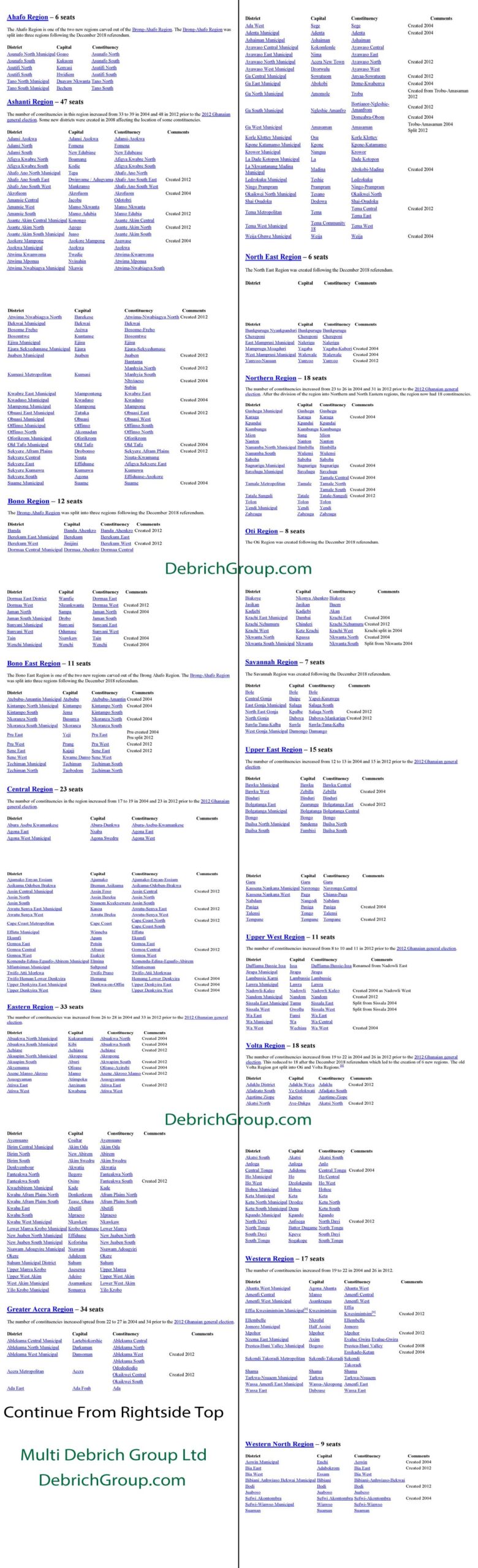
From the vibrant urban centers of Accra and Kumasi to the serene rural landscapes of Upper West and Volta, Ghana’s 276 constituencies across 16 regions come alive with political debates, promises, and hopes for the future.
276 Constituencies: The Pulse of Democracy
The electoral landscape in Ghana is divided into 276 constituencies, each a microcosm of the nation’s diverse tapestry. These constituencies reflect the voices of farmers, traders, teachers, students, and professionals, forming the lifeblood of the election process. Each constituency offers a unique perspective on the pressing issues—ranging from infrastructure and education to healthcare and youth employment—that shape Ghana’s political discourse.
In these constituencies, Members of Parliament (MPs) are elected, playing a crucial role in national legislation. As voters in these areas prepare to cast their ballots, the questions they consider are not merely about their communities but the broader direction Ghana should take in the years to come.
16 Regions: A Mosaic of Unity in Diversity
Ghana’s 16 regions, each with its distinct culture, economy, and aspirations, form the bedrock of its governance structure. From the bustling Greater Accra Region, the nation’s economic powerhouse, to the Northern Region, rich in culture and tradition, and the oil-rich Western Region, the diversity is profound.
Recent regional reorganizations, such as the creation of new regions like Oti and Western North, have been pivotal in decentralizing governance and bringing development closer to the people. These regions will play a critical role in shaping the outcome of the 2024 elections, as political parties and candidates tailor their campaigns to resonate with the unique needs of each area.
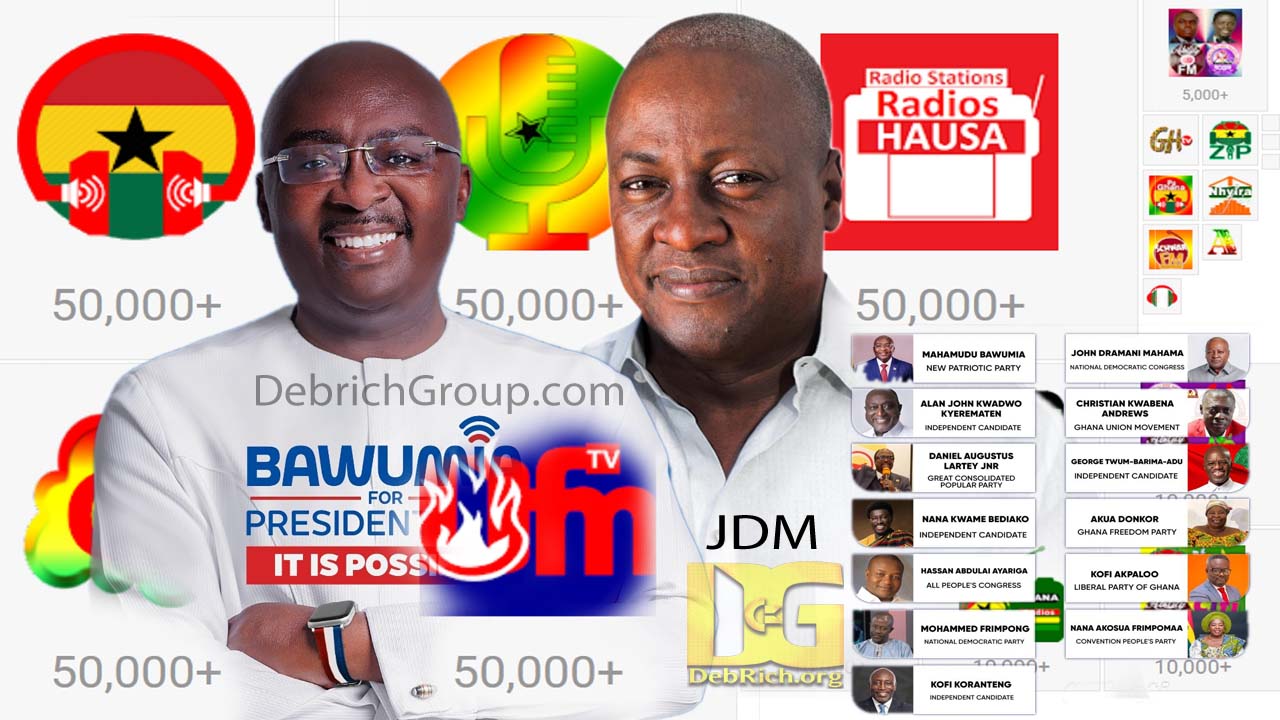
12 Candidates: Diverse Choices for the Presidency
The 2024 election is set to be one of the most competitive in Ghana’s history, with 12 presidential candidates vying for the nation’s highest office. Representing a spectrum of ideologies, these candidates bring fresh ideas, contrasting visions, and varying leadership styles to the table.
The leading contenders include familiar faces from the two dominant political parties: the New Patriotic Party (NPP) and the National Democratic Congress (NDC). However, the inclusion of other candidates from smaller parties and independent aspirants ensures a broad range of choices for voters, fostering a vibrant multi-party democracy.
For the youth, who constitute a significant portion of the electorate, these candidates’ policies on education, job creation, and technology adoption will weigh heavily. Meanwhile, rural voters may prioritize agricultural reforms, access to healthcare, and infrastructure development.
One President: The Unity of Purpose
While the election showcases Ghana’s diversity in candidates, constituencies, and regional dynamics, the ultimate goal is singular: electing one president who will lead the country for the next four years. The president will be tasked with uniting a nation that values both its cultural diversity and its collective aspirations.
The presidency represents not just a political office but a beacon of hope for millions. The president’s mandate is to embody the values of integrity, transparency, and commitment to progress. Whether addressing economic challenges, fostering peace in the sub-region, or tackling global issues like climate change, Ghana’s next president must rise to the occasion with vision and vigor.
The Election Journey: A Celebration of Democracy
Ghana’s elections are a celebration of its democratic heritage. Since transitioning to multi-party democracy in 1992, the country has remained a model of peaceful political transitions in Africa. The 2024 elections are no exception, with the Electoral Commission of Ghana working tirelessly to ensure transparency, fairness, and inclusivity.
The enthusiasm among voters, the debates among candidates, and the vibrant participation of civil society underline Ghana’s commitment to strengthening its democratic institutions. International observers, regional partners, and the Ghanaian diaspora eagerly watch as the nation sets yet another benchmark in electoral integrity.
The Path Forward: Hope and Responsibility
As Ghana marches toward December 7, 2024, the stakes are high, and the anticipation is palpable. Every vote cast will shape the narrative of a country determined to progress while preserving its democratic ideals. The challenges ahead are undeniable, but so is the resilience of the Ghanaian spirit.
In the end, 276 constituencies, 16 regions, 12 candidates, and one president reflect the beautiful paradox of democracy: diversity in choice, unity in purpose. Ghana’s elections are not merely a political event—they are a testament to the enduring belief that the power to transform a nation lies in the hands of its people.
As the sun rises on Election Day, may every Ghanaian voter, from the bustling streets of Accra to the tranquil savannas of the north, feel the weight and privilege of their decision. Together, they will define the next chapter of Ghana’s remarkable story.
List of 276 Ghana constituencies, 16 Ghana Regions
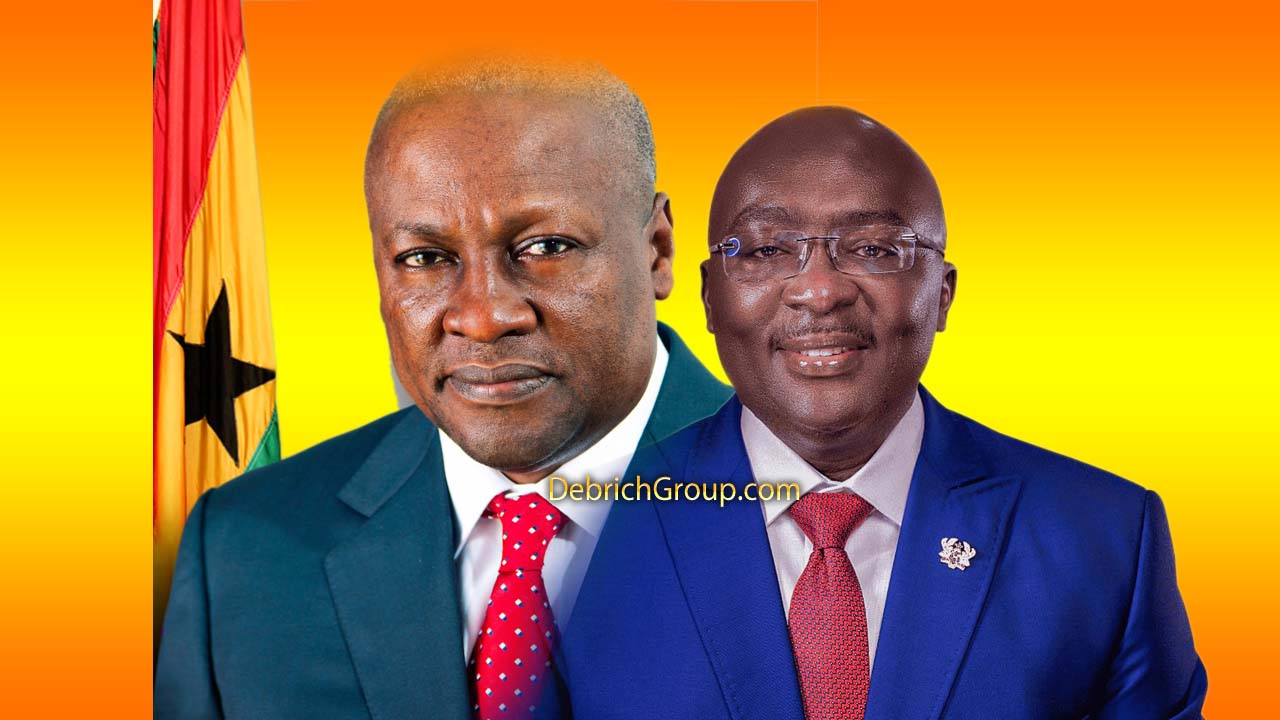
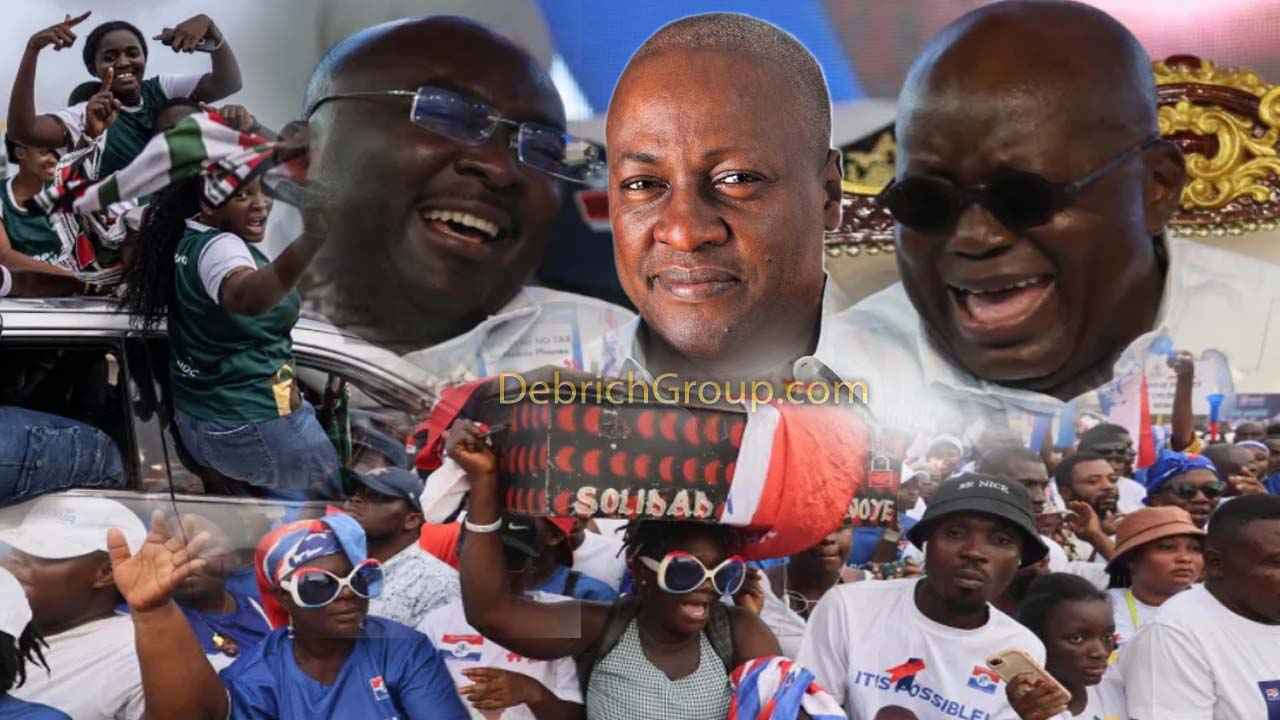
Vice President Mahamudu Bawumia, Ex-President John Mahama, President Nana Akufo-Addo
Voters in the West African nation of Ghana are heading to the polls on Saturday to decide the country’s next parliament and president in tense, tightly contested elections that come amid biting economic hardship and general frustration with outgoing President Nana Akufo-Addo’s government.
The presidential election pits current Vice President Mahamudu Bawumia of the ruling New Patriotic Party (NPP) against his main challenger, former President John Dramani Mahama of the opposition National Democratic Congress (NDC).
Bawumia and Mahama are both from the historically disadvantaged northern part of the country and have rallied hard to appeal to their support bases. Their approaches to the economy – Ghana’s main issue at present – differ. While the NPP favours a private sector growth approach, the NDC wants to implement more government intervention.
“These elections are unique because the north will likely determine the winner for the first time,” analyst Emmanuel Yeboah of the Ghana Center for Democratic Development (CDD) told Al Jazeera.
One of West Africa’s most prosperous and stable economies, Ghana is known for its largely peaceful transfers of power and its overall security in a region where armed groups hold sway.
With 34 million people, it is the second-most populous country in the region. The southern Akan group (46 percent) is the largest ethnic group and most Ghanaians (71 percent) are Christians. Accra is the capital city and the currency is the cedi.
How does voting work in Ghana?
Ghanaians 18 and above are eligible. Some 18.8 million people are registered to vote in the ninth general elections since multiparty voting was reintroduced in 1992, following years of military rule. Turnout, on average, has been about 70 percent in previous elections.
Voters will select representatives for 276 parliamentary seats representing all constituencies.
Voters will assemble at voting stations nationwide to receive their ballot papers from 7am West Africa Time (06:00 GMT).
Of the 12 candidates vying for the top job of president, there are two favourites: the candidates for the ruling NPP and opposition NDC parties.
The candidate who wins more than half of votes cast wins the election. In the event of no overall majority, a run-off vote between the two with the most votes will take place, likely a week later.
Results of the election are expected by Monday, December 10.
Who are the main candidates for president?
The Electoral Commission of Ghana has approved 12 presidential candidates, but it is widely accepted that the presidential election is a two-horse race between the established NPP and the opposition NDC.
Presidential power has shifted between the two main parties in close elections since 1992. Neither party, however, has managed to “break the eight” or win three consecutive presidential terms. Presidential terms are for four years and no individual may serve more than two terms.
Mahamudu Bawumia
The 61-year-old Oxford graduate and former central bank deputy represents the ruling NPP and is a Muslim from the historically disadvantaged north of the country. He is currently vice president of Ghana.
He was not a popular pick when he first campaigned to be President Akufo-Addo’s deputy in 2016, as he had not held a political post before.
As a key player in the presidential economic management team, Bawumia has been blamed by the opposition for the country’s financial woes. In 2022, Ghana defaulted on its sovereign debt for the first time, pushing inflation to unprecedented levels.
As a result, soaring food prices, a lack of jobs for young Ghanaians and other issues have damaged support for the NPP in general.
Throughout his campaign for the presidential election, which ended on Thursday, Bawumia has blamed external factors like COVID-19 for these economic problems. His team has also emphasised two of the government’s biggest wins: free education for senior secondary students since 2017 and a “one-district, one factory” plan which has seen the government support the building of factories in many of the 261 administrative districts, such as the Twyford Ceramics factory which opened in the Shama District of the Western Region in 2021.
That strategy seems to be working, analysts say. “Some three months ago, many people actually thought it was a clear win for Mahama,” Yeboah of the CDD said. “Right now, it’s just too close to call.”
Still, Bawumia faces challenges, as many remain doubtful about the NPP government in general. In a country where tribe and religion tend to influence how people vote, the fact that Bawumia is a northerner, a Muslim and a non-Akan could also work against him.
As the first NPP candidate not from the Twi-speaking Akan group, he was forced to run with Matthew Opoku Prempeh, a Christian Akan, as his deputy to appease the ruling party’s traditional home base.
If he wins, Bawumia will become Ghana’s first Muslim president. The NPP would also, for the first time, have won three consecutive terms in office.
John Dramani Mahama
Mahama, 66, of the opposition NDC party, ascended to the presidency in 2012, after President John Atta Mills died. His tenure until 2016 was marked by turbulence: drastic power cuts, locally called “dumsor”, earned him the nickname “Mr Dumsor”.
Government agencies battled allegations of corruption and Mahama was also accused of receiving bribes from a businessman in the form of a Ford four-wheel drive in 2012.
When Mahama lost his second bid for the presidency to Akufo-Addo in 2016, he became the first incumbent to miss out on a second term. In 2020, he stood for president again and lost to his rival.
However, the politician, who is also from the north and is Christian, has campaigned on promises of a swift economic recovery from NPP rule.
He appeals mostly to young people between the ages of 18 and 35, who make up 62 percent of the voting population, as well as to the NDC’s north and central region bases.
Alan Kyerematen
A former minister and ex-member of the NPP, Kyerematen, 69, exited the party ahead of chaotic and disputed primaries late in 2023.
As an independent candidate backed by his Movement for Change party, which he set up in September 2023, Kyeremetan is not expected to pose much of a challenge to the NPP or NDC parties. However, analysts warn that he could steal NPP votes in its Akan strongholds, particularly in central Kumasi city, where the politician is from.
Nana Kwame Bediako
The real estate business mogul, 44, is running as an independent candidate, backed by the New Force movement, which targets young people.
Before he ventured into politics, Bediako was widely known as a wealthy man with a penchant for flair, including for once keeping pet tigers in his home.
The announcement of his decision to stand as a presidential candidate came weeks after billboards in Accra showed a mystery, masked candidate, and piqued young people’s interest. Bediako has promised to end the country’s “brain drain” by creating more jobs.
What are the key issues?
Economy
Ghana is in the throes of its worst economic crisis in a generation, despite being a leading producer of cocoa, gold and oil. Food prices are soaring and the cedi has plunged in value against the dollar.
The height of the country’s economic crisis was in 2022, when Ghana failed to make repayments on its external debts – amounting to $30bn – for the first time. Inflation had risen above 50 percent by the end of that year and the country was unable to produce funding for the following year’s budget.
Power blackouts are frequent as the Electricity Company of Ghana (ECG) owes $1.6bn to private power suppliers. In October 2024, one supplier, Sunon Asogli, suspended operations because of the debts.
President Akufo-Addo’s government was forced to seek a $3bn International Monetary Fund (IMF) loan package to support the economy, even though he had previously promised never to do this. This week, the IMF released the third tranche of the loan, worth $360m. The bank released $600m in July 2023 and January 2024. Inflation has slowed to 20 percent since 2020, but the cost of living remains onerous for many.
The two main parties differ in their approach to fixing the economy. While the ruling NPP favours private sector-led growth to boost the economy, the NDC wants to implement government-led interventionist policies such as large, public infrastructure projects in agriculture and manufacturing.
Unemployment
Unemployment has hit 14.7 percent in Ghana, according to government data from 2023. The lack of jobs is prompting young Ghanaians, particularly healthcare workers, to move away from Ghana in what has been termed a “brain drain”.
Bawumia’s campaign blames other factors for this: COVID-19, the Russia-Ukraine war and even problems created during Mahama’s last presidency. The vice president has promised new economic strategies: cancelling some taxes, such as import duties on mobile phones, for example.
NDC’s Mahama, for his part, has made the economy a cornerstone of his campaign, promising to cut the number of ministers to reduce government spending. He has called Akufo-Addo and Bawumia’s IMF deal “reckless”.
Corruption
This week, a Ghanaian news site, The Fourth Estate, revealed that the country’s National Service Authority, which recruits graduates to public offices, was paying salaries to thousands of “ghost workers”, although this claim has not been officially investigated.
Ghana ranked 70th out of 180 countries on the Corruption Perceptions Index in 2023, indicating high levels of political corruption. Mahama of the NDC has promised an “Operation Return all Loot” and to target corrupt officials.
Illegal mining and pollution
Known as “galamsey”, illegal gold mining is causing widespread devastation to water bodies that millions depend on for consumption and agriculture in Ghana.
Unemployment and higher gold prices this year have intensified galamsey, which involves digging up the topsoil and using water and chemicals including mercury and cyanide to wash it off and uncover pieces of gold. The soil flows back into water bodies such as the River Pra, which is now a polluted murky brown colour as a result. Farmers say the pollution has crippled cocoa harvests.
In August, Ghana’s water authority said it had to cut off 75 percent of clean water supplies to communities, saying it could not remove the harmful chemicals and that it was unsafe to drink. The matter has prompted protests and accusations that the government is ineffective in stopping it. Some have called it an “ecocide”.
Illegal mining used to be mostly confined to the south of the country but has also spread to the north, Ewurabena Yanyi-Akofur, country head of the non-governmental organization WaterAid Ghana, told Al Jazeera.
Research by WaterAid shows that the communities where illegal mining is heaviest also suffer health issues such as chest pain, related to their work and the polluted water. However, when asked, illegal miners say they have no choice because of the lack of jobs.
“You have to feel sympathy for their situation. Unemployment rates are high, and climate change has resulted in less reliable rainfall that’s affecting farming,” Yanyi-Akofur added.
By 2030, if things don’t change, WaterAid predicts Ghana might run out of potable water altogether, and would be forced to import water from its neighbours.
Could there be outbreaks of violence during these elections?
While elections in Ghana have been largely peaceful in the past, pockets of violence could be likely this time, experts say.
“Some hotspots we are watching are Accra and the Central Region, which are swing regions that any of the candidates could win,” analyst Yeboah of Ghana CDD said.
Parts of the Northern Region, which is now tensely split between Bawumia and Mahama, could also witness some violence, he said.
Ghana Elections Update, Mahamudu Bawumia, John Dramani Mahama
GHANA ELECTIONS 2024: As of today, December 7, 2024, Ghanaians are actively voting in the much-anticipated presidential and parliamentary elections.
According to Multi DebrichGroup.com analyst, 17 million registered voters are expected to cast their ballots across 40,976 polling stations in 276 constituencies.
The elections are a pivotal moment for Ghana as it seeks to consolidate its democratic traditions amidst significant economic and social challenges.
Key Developments
Peaceful Voting with Isolated Incidents: While the voting process has been largely peaceful, isolated incidents, including a tragic shooting in Nyankpala that left one dead and two injured, have marred the day. Security has been heightened to ensure the safety of voters nationwide.
Candidates and Parties: Leading contenders include Mahamudu Bawumia of the New Patriotic Party (NPP), John Dramani Mahama of the National Democratic Congress (NDC), and several others, including independent candidates. The NPP and NDC remain the dominant players, with Mahama emphasizing economic reforms and Bawumia focusing on continuity.
Major Issues: Economic hardship, youth unemployment, education, healthcare, and infrastructure are the top concerns for voters. Ghana’s return to IMF support has dominated political debates, influencing campaign narratives.
Observers: Over 4,000 local and international observers, including CODEO and other organizations, are monitoring the elections to ensure transparency.
Voter Dynamics By Ghana Multi Debrich Group Ltd.
This election sees an influx of over 700,000 first-time voters, many of whom belong to Generation Z. The participation of young voters is crucial, as they comprise over 55% of the electorate. However, economic disenfranchisement and voter apathy remain concerns, especially among the youth.
Results and Next Steps
Vote counting will commence immediately after polling closes, with the Electoral Commission set to release certified results. If no presidential candidate secures over 50% of valid votes, a runoff will be organized.
For live updates, including radio and TV broadcasts of election results and analysis, you can download Ghanaian apps directly from the Google Play Store for convenient access to FM radio and TV stations covering the event.
Ghana’s election today is a testament to its vibrant democratic ethos, with citizens eager to shape the future direction of the country.
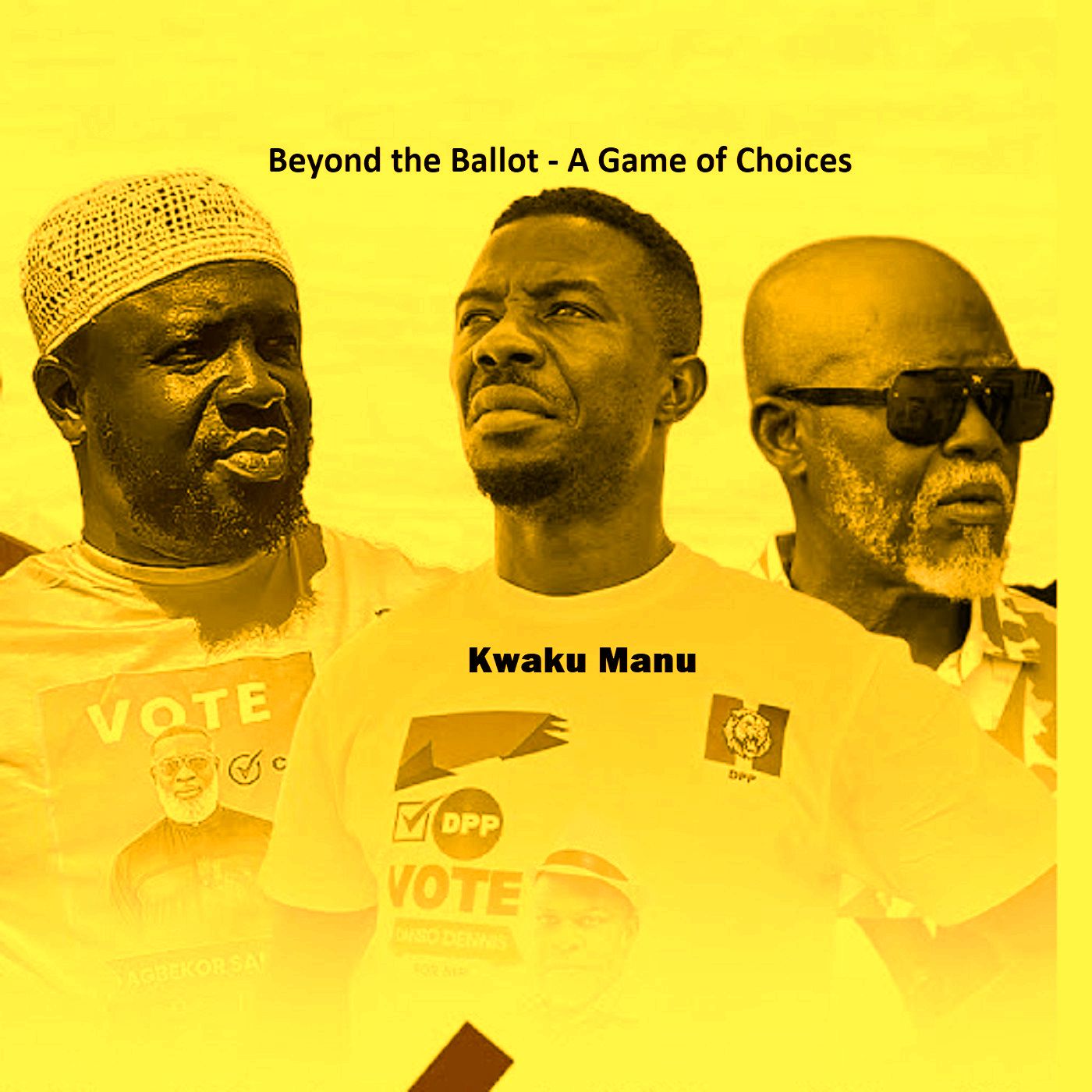
The political journey kicks off as the Renowned Ghanaian Kumawood actor and comedian Kwaku Manu, popularly known as Bob Sika, has released the much-anticipated first episode of his latest series, Beyond the Ballot.
According to DebrichGroup.com analyst, “A Game of Choices Begins,” this intriguing new project takes viewers on a gripping journey into the dynamics of power, politics, and the decisions that shape our communities. This is your chance to experience Ghanaian storytelling at its finest! Watch it now on YouTube.
Why You Must Watch Beyond the Ballot
From DebrichGroup.com views, Kwaku Manu is celebrated for his unique ability to blend humor, drama, and life lessons into compelling narratives. In Beyond the Ballot, he takes his craft to new heights, exploring themes that resonate with every Ghanaian: the value of leadership, the consequences of our choices, and the need for unity in diversity.
The series promises to entertain, educate, and inspire, making it a must-watch for families, young people, and anyone passionate about Ghana’s future.
What to Expect in Episode 1
Episode 1, A Game of Choices Begins, sets the stage for a tale filled with suspense, laughter, and thought-provoking moments. It introduces viewers to a community on the brink of transformation, where every decision carries weight. The characters—brought to life by Kwaku Manu and a talented cast—navigate personal and political challenges, offering valuable insights into the importance of integrity, vision, and teamwork.
WATCH FULL VIDEO BELOW:
A Message for Ghanaians
Kwaku Manu’s storytelling reflects our realities, capturing the essence of Ghanaian culture and struggles while encouraging viewers to think critically about their role in society. Beyond the Ballot is not just a series—it’s a movement calling on Ghanaians to make informed decisions in all areas of life.
Watch and Join the Conversation
Don’t miss out on this exciting journey! Join the thousands of Ghanaians already captivated by Kwaku Manu’s brilliance. Watch Episode 1 on YouTube and be sure to share your thoughts in the comments. Let’s celebrate Ghanaian talent and support content that uplifts and inspires.
In a world where luxury meets audacity, the title of “World’s Most Expensive Banana” is no metaphor—it’s a reality, thanks to blockchain visionary and entrepreneur Justin Sun.
According to DebrichGroup.com business analyst, the Tron’s cryptocurrency mogul has once again made headlines, this time with a jaw-dropping $6.2 million purchase of a banana-themed artwork.
This unprecedented deal not only speaks volumes about the evolving intersection of contemporary art and the digital economy but also reinforces Sun’s reputation as a boundary-pushing disruptor.
The Artwork in Question: A Banana Beyond the Ordinary
The $6.2 million banana artwork isn’t your average fruit-laden still life. While details of the piece remain partly veiled to stoke intrigue, it’s believed to be an extension of the late Maurizio Cattelan’s famed Comedian, the banana duct-taped to a wall that stirred the art world in 2019. Cattelan’s conceptual masterpiece, hailed for its audacious simplicity, ignited global debate over the meaning of art and its value.
In Sun’s iteration of the banana phenomenon, the focus shifts to a new medium—one that blends physical art with blockchain technology. Sun has reportedly acquired the piece not only for its inherent artistic value but as part of a larger vision to tokenize high-value art and make it accessible to the crypto world.
Why $6.2 Million?
Justin Sun is no stranger to extravagant purchases that push cultural boundaries. From a record-breaking $4.6 million charity lunch with Warren Buffett to his acquisition of a $69 million Beeple NFT, Sun’s spending often serves as a statement about the future he envisions. The $6.2 million price tag on this banana art is symbolic, signaling the new age of valuation in the digital era, where tangible assets meet intangible innovation.
For Sun, this isn’t merely a purchase—it’s a bridge between art enthusiasts and crypto investors. In his words, “Art is no longer confined to galleries or museums; its value can be preserved, shared, and monetized in ways we are only beginning to explore.”
Art Meets Blockchain: Tokenizing Creativity
A significant aspect of Sun’s acquisition lies in its potential for tokenization. The artwork is set to be transformed into an NFT (Non-Fungible Token), a digital asset recorded on a blockchain that verifies ownership and authenticity. Tokenizing the banana artwork would allow collectors and investors worldwide to own fractional shares of a cultural icon, democratizing access to art once reserved for the elite.
This isn’t Sun’s first foray into art NFTs. He has previously acquired works by Picasso and Andy Warhol with similar plans to merge traditional art with cutting-edge digital platforms. Sun’s approach underscores his commitment to making art investment a global, inclusive experience.
A Banana, or a Statement?
Critics may scoff at the absurdity of paying millions for a banana-themed artwork, but the deal goes beyond the fruit. It challenges conventions, sparking dialogue about what constitutes value in art and how that value is recognized in the digital age. Much like the cryptocurrency ecosystem Sun champions, this deal questions the status quo and highlights the power of disruption.
Sun’s extravagant purchase also invites reflection on the commodification of art. In an age where the lines between digital and physical assets blur, Sun’s banana is less about a fruit and more about an idea—an idea that art can evolve with technology, transcend boundaries, and redefine ownership.
The Future of Art and Tech
As the worlds of blockchain and fine art collide, Sun’s acquisition of the world’s most expensive banana signifies a pivotal moment. It hints at the limitless possibilities for art in the digital economy, where cultural artifacts are no longer confined to private collections or institutional walls.
With Justin Sun’s $6.2 million banana deal, the art world has taken a bold leap into uncharted territory. Whether seen as an audacious stunt or a visionary investment, one thing is certain: Sun’s banana will leave its mark on both art history and the future of digital ownership.
In the end, the banana isn’t just fruit—it’s a revolution.
Justin Sun thrilled to announce that “I’ve bought the banana🍌”.
I’m willing to donate my banana to Elon Musk, tape it to the body of a SpaceX rocket, and send it to both Mars and the Moon! 🚀🍌🌕🔴 pic.twitter.com/J1eOJEEfp4