
UK Deports Number Of Nigerians, Ghanaians, Brazilians, Vietnams
EUROPE: The United Kingdom has deported some Ghanaians and Nigerians to their home countries on one flight.
The deportees 44 in number who left the UK on Friday, October 18, 2024, according to a report by theguardian.com, sighted by GhanaWeb, were forcibly removed as confirmed by the UK Home Office.
“The news came as it emerged that any asylum seekers who arrive in Diego Garcia before a treaty between the UK and Mauritius to hand back the Chagos Islands are finalised will be sent to Saint Helena, a British territory in the Atlantic Ocean described as one of the most remote places on Earth,” parts of the report said.
Also, the report described the number of asylum seekers arriving in Diego Garcia since 2021 in the hundreds, not comparable to the tens of thousands crossing the Channel in small boats from northern France to the UK in recent years.
The Guardian added that the Home Office said the Nigeria and Ghana deportations were part of a “major surge” in immigration enforcement and returns.
According to statistics, 3,600 people have been returned to various countries, since the Labour Party came to power in July including about 200 to Brazil and 46 on a flight to Vietnam and Timor-Leste.
There are also regular deportation flights to Albania, Lithuania and Romania.
“Deportation flights to Nigeria and Ghana are relatively rare, with just four recorded since 2020, according to data released under freedom of information rules. The previous flights had far fewer people onboard, with six, seven, 16 and 21 respectively. Friday’s flight had more than double that number removed on a single flight,” the report noted.
The Guardian spoke to four Nigerians while they were held at Brook House immigration removal centre near Gatwick before their deportation.
One man due to fly tried to kill himself. His cellmate, who witnessed the attempt, said he was “very traumatised” by what he had seen.
A second man said: “I’ve been in the UK for 15 years as an asylum seeker. I have no criminal record but the Home Office has refused my claim.”
A third man said he had been groomed into exploitation as a child and had torture scars on his body. “I told the Home Office I was a victim of trafficking. They rejected my claim.”
A fourth said he had desperately searched for a solicitor to challenge his removal directions but had been unable to find anyone to represent him.
“We are extremely shocked at the cruelty of these deportations, especially with the speed, secrecy and the lack of access to legal support. In the words of one detainee, we spoke to before he was put on the flight: ‘The Home Office is playing politics with people’s lives. We have not done anything wrong other than cry for help,” Fizza Qureshi, the Chief Executive of Migrants’ Rights Network, who was in contact with some of the people on the Nigeria/Ghana deportation flight before they left the UK, said.
A Home Office spokesperson told the Guardian: “We have already begun delivering a major surge in immigration enforcement and returns activity to remove people with no right to be in the UK and ensure the rules are respected and enforced, with over 3,600 returned in the first two months of the new government.”
Daasebre Akuamoah Agyapong II, the Paramount Chief of Kwahu, has been destooled by the Kwahu Traditional Council, stripping him of all titles and chieftain privileges with immediate effect.
This decision is related to his alleged involvement in an extortion scheme and misconduct during his tenure as board chairman of the Agricultural Development Bank PLC (ADB).
According to members of the traditional council, the decision was necessary to rid the Kwahu state of any shame and to prevent any issues that could lead to violence.
The rites performed on Saturday, October 19, 2024, involved the elders of the traditional council pouring libation and offering prayers to their deities as part of the final procedure for the destoolment.
The decision to destool him also follows a petition from the youth of Kwahu on October 11, 2024, demanding decisive actions against Daasebre Akuamoah Agyapong II in line with their customs and traditions to restore the sanctity of the Kwahu Traditional Council.
Daasebre Akuamoah Agyapong II, who also served as the Board Chairman of ADB, allegedly extorted GH₵2 million from a businessman, Collins Darkwah Aboagye, under the pretext of facilitating a GH₵12million loan.
Despite paying a GH₵50,000 facilitation fee and the requested loan amount, the businessman claimed that the chief delayed repayment and only returned a fraction of the money after months of pressure.
This controversy led to the Bank of Ghana (BoG) issuing a directive on October 10, 2024, ordering Daasebre Akuamoah Agyapong II to resign as Board Chairman of ADB due to the reputational damage inflicted on the bank. The BoG stated that the chief’s continued presence at the bank was untenable, sparking widespread calls for his removal from both traditional and financial leadership positions.
Top 10 Best Business To Do In Ghana, With Good Income
According to Ghanaian company, Multi Debrich Group Ltd analyst, starting a business in Ghana can be a rewarding venture, especially if you align your business idea with local needs and market opportunities.
Here are some business ideas that have shown potential for generating good income in Ghana:
1. Agriculture and Agribusiness
Crop Farming: Cultivating high-demand crops such as maize, cassava, and vegetables.
Poultry Farming: Producing chicken and eggs for local consumption.
Fish Farming: Aquaculture for tilapia and other fish.
Organic Farming: Growing organic fruits and vegetables for niche markets.
2. Real Estate and Property Development
Residential Real Estate: Developing housing for the growing urban population.
Commercial Real Estate: Investing in office spaces, retail stores, and industrial properties.
Property Management: Managing rental properties and offering maintenance services.
3. Retail and E-commerce
Online Retail: Selling products through e-commerce platforms.
Fashion and Apparel: Opening boutiques or retail stores for clothing and accessories.
Consumer Goods: Selling fast-moving consumer goods (FMCG) like groceries and household items.
4. Technology and Innovation
Tech Startups: Developing apps, software, or tech solutions tailored to local needs.
Fintech: Providing financial services through digital platforms.
ICT Services: Offering IT support, networking solutions, or cybersecurity services.
5. Education and Training
Tutoring Services: Offering academic support for students.
Vocational Training: Providing skills development in areas like technology, crafts, or hospitality.
Language Schools: Teaching English or other foreign languages.
6. Healthcare and Wellness
Pharmacies and Health Clinics: Providing medical supplies and healthcare services.
Fitness Centers: Opening gyms or wellness centers focusing on fitness and healthy living.
Alternative Medicine: Offering services like herbal medicine or traditional healing.
7. Food and Beverage
Restaurants and Cafes: Serving local cuisine or international dishes.
Food Processing: Producing packaged foods, snacks, or beverages.
Catering Services: Providing food for events and corporate functions.
8. Tourism and Hospitality
Tour Operators: Organizing tours and travel experiences for tourists.
Hotels and Guesthouses: Accommodating visitors with quality lodging.
Travel Agencies: Offering travel planning and booking services.
9. Transport and Logistics
Logistics Services: Managing transportation and supply chain operations.
Taxi and Ride-Sharing Services: Providing urban transportation solutions.
Freight and Cargo Services: Handling goods transportation both locally and internationally.
10. Entertainment and Media
Event Planning: Organizing events, parties, and corporate functions.
Content Creation: Developing media content for television, radio, or online platforms.
Music and Film Production: Producing local music or film projects.
Key Considerations for Success:
Market Research: Understand the local market, consumer preferences, and competition.
Regulatory Compliance: Ensure your business adheres to Ghanaian laws and regulations.
Networking: Build connections with local businesses, suppliers, and potential clients.
Quality Service: Focus on delivering high-quality products or services to build a good reputation.
Each of these sectors offers unique opportunities and challenges, so selecting the right one will depend on your skills, interests, and resources.
As of October, 2024, Multi Debrich Group Ltd analyst can confirm that, the ranking of the world’s strongest currencies is based on their exchange rates relative to the U.S. dollar (USD), which is the most commonly used benchmark.
Here’s a list of the top 10 strongest currencies:
1. Kuwaiti Dinar (KWD)
Exchange Rate: 1 KWD = 3.25 USD (approx.)
The Kuwaiti Dinar is the highest-valued currency unit in the world. Kuwait’s oil-rich economy and low inflation rate have made its currency the most valuable.
2. Bahraini Dinar (BHD)
Exchange Rate: 1 BHD = 2.65 USD (approx.)
Bahrain’s Dinar is the second most valuable currency globally, largely due to the small island nation’s oil industry. It is pegged to the U.S. dollar.
3. Omani Rial (OMR)
Exchange Rate: 1 OMR = 2.60 USD (approx.)
The Omani Rial is very strong due to Oman’s robust oil production. It is also pegged to the U.S. dollar, ensuring exchange rate stability.
4. Jordanian Dinar (JOD)
Exchange Rate: 1 JOD = 1.41 USD (approx.)
Jordan’s currency is strong, despite the country’s lack of oil resources, thanks to effective monetary policies and its peg to the U.S. dollar.
5. British Pound Sterling (GBP)
Exchange Rate: 1 GBP = 1.22 USD (approx.)
The British Pound is the strongest currency in Europe and holds a significant historical influence in global markets. Its value reflects the UK’s economic strength.
6. Cayman Islands Dollar (KYD)
Exchange Rate: 1 KYD = 1.20 USD (approx.)
The Cayman Islands is a global tax haven, and the value of its currency is influenced by the nation’s strong financial services industry.
7. Swiss Franc (CHF)
Exchange Rate: 1 CHF = 1.09 USD (approx.)
The Swiss Franc is widely considered a safe-haven currency, benefiting from Switzerland’s stable economy, financial sector, and neutrality.
8. Euro (EUR)
Exchange Rate: 1 EUR = 1.05 USD (approx.)
The Euro is used by 19 of the 27 European Union member countries and is the second most traded currency globally after the U.S. dollar.
9. US Dollar (USD)
Exchange Rate: 1 USD = 1 USD
The U.S. dollar is the world’s primary reserve currency and the most widely used in global trade, but several currencies surpass its value in terms of exchange rates.
10. Gibraltar Pound (GIP)
Exchange Rate: 1 GIP = 1.22 USD (approx.)
The Gibraltar Pound is tied to the British Pound on a 1:1 basis, but it circulates only within Gibraltar. Its value mirrors that of the GBP.
Honorable Mentions:
Canadian Dollar (CAD): Known for its stability due to Canada’s strong economy. Australian Dollar (AUD): Another strong and widely traded currency.
These rankings can fluctuate based on economic policies, geopolitical factors, and market trends. However, most currencies in the top ten have been consistently strong due to oil exports, monetary stability, or robust financial systems.
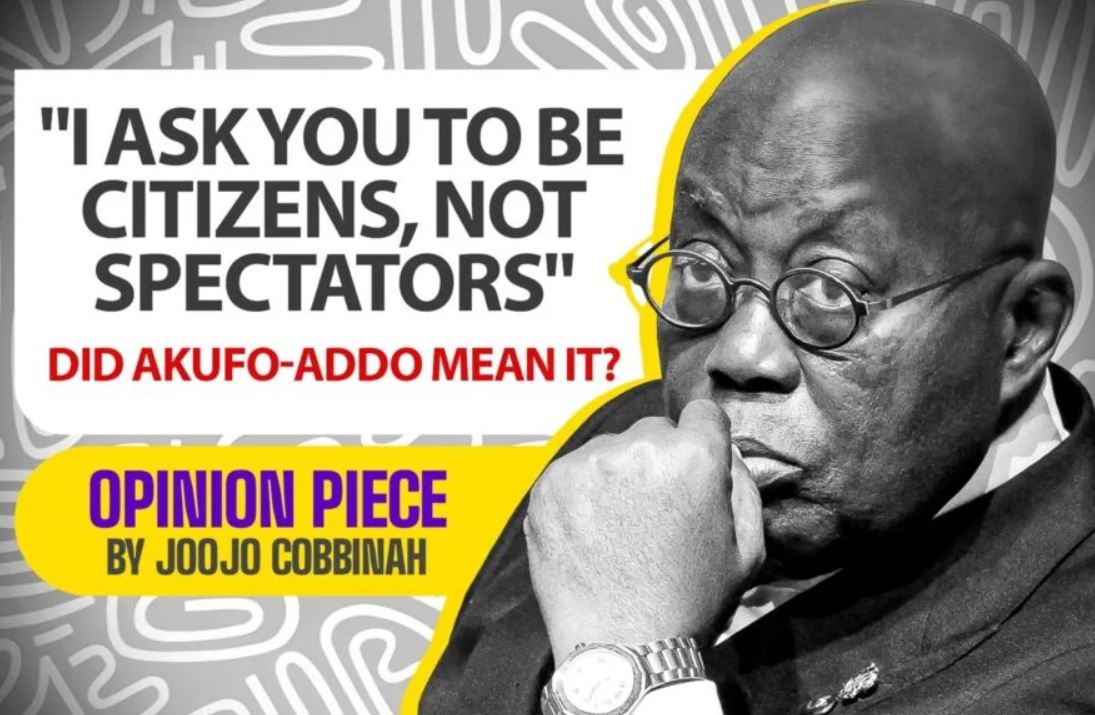
During his inaugural speech on January 7, 2017, President Akufo-Addo boldly declared, “I ask you to be citizens, not spectators.” Soon after, he faced backlash for plagiarising the words of former U.S. President George W. Bush.
His team put up a spirited defence amidst claims that he was merely inspired by the former U.S. President’s words.
At the time, the nation was focused on Akufo-Addo’s victory over John Mahama in the 2016 elections. Ghanaians yearned for the change Akufo-Addo promised. The plagiarism issue seemed trivial and was brushed aside, as many believed it was not worth dwelling on. However, over the years, it has become clear that Akufo-Addo’s call for active citizenship is hollow. He merely delivered a script prepared by his speechwriters, offering Ghanaians what they wanted to hear, not what he genuinely believed.
An analysis of his inaugural speech reveals a pattern of broken promises. One of the most striking examples was his vow to take care of the elderly in the “dusk of their lives”. Instead of fulfilling this promise, his government has forced the elderly to endure financial losses through the domestic debt exchange programme, during an economic downturn. For the first time in the country’s history, elderly citizens have taken to the streets of
Accra, protesting against “haircuts” on their investments — an outcome the President had previously assured Ghanaians would not happen when he said, in a televised address, that “there will be no haircut”. He broke this promise and regrettably, it is just one example of the many unfulfilled pledges he has made during his presidency.
The heartache of broken promises is felt across the nation, but perhaps, the most damaging legacy of Akufo-Addo’s tenure is the erosion of the protest culture. As a young man, Akufo-Addo himself led protests against socio-economic injustices. Yet, as president, he has overseen a government that silences voices of dissent, allowing the Attorney-General and police service to remand young people for protesting galamsey, (the illegal, small scale mining menace that is currently threatening Ghana’s agricultural sector and has led to the heavy pollution of several river basins).
The president’s transformation from a vocal advocate for social justice to a silent observer of oppression is one of the most disheartening aspects of his tenure. It is a painful betrayal of the trust that well-meaning Ghanaians reposed in him.
The Occupy Julorbi protest caused significant vehicular traffic as demonstrators took to the streets, with one of the protest leaders, Oliver Mawuse Barker-Vormawor Esq., notably shaking a police metal barricade and throwing away a police key. While these actions were provocative, the question remains: did they constitute violence? To answer this, we can refer to United Nations (UN) General Comment 37, which addresses the right to peaceful assembly. According to the UN, peaceful assembly must not involve violence. “Violence”, in the context of Article 21, entails the use of physical force by participants that could cause injury, death or serious damage to property. Importantly, acts like pushing, shoving or disrupting traffic do not meet the threshold of violence.
When Barker-Vormawor shook the barricade, did it actually harm anyone? Was there any immediate danger to a police officer or bystander? The answer is a clear no. Shaking a metal barricade may have been a symbolic show of defiance, but it did not have the potential to cause injury or damage. Similarly, when he took the police key and threw it away, it was unruly, but once again, no one was harmed, and no damage occurred. Even the protestors who blocked the road with stones did not cause physical injury or destruction of property.
These actions, while undoubtedly disorderly and irritating, do not meet the criteria for violence under any reasonable definition. The UN guidelines make clear that peaceful protests can be disruptive without turning violent, as long as there is no intent or action that could cause physical harm or serious property damage. None of the actions taken by the protestors — whether shaking barricades, throwing keys or blocking roads — resulted in such outcomes.
What is truly shocking is the response from the authorities. Instead of recognizing the difference between provocation and violence, they have chosen to treat these actions as grave offences. The arrest and continued detention of these protestors, many of whom are young, raise serious questions about the intent of the current administration. This does not appear to be about justice; it seems more about sending a chilling message of intimidating the youth and discouraging future protests.
What, then, are the actual crimes of these protestors? They did not destroy property nor did they harm anyone. The real crime they seem to be accused of is exercising their democratic right to peaceful assembly and difference of opinion. By holding them in custody, officialdom seems determined to instill fear in young people, discouraging them from speaking out or standing up for what they believe.
This trend is deeply troubling. Are we, as a society, trying to raise a generation of docile, unengaged youth who are too afraid to express themselves? The suppression of peaceful protest is not just an attack on these individuals— it is an affront on the spirit of democracy itself. When the youth are punished for asserting their rights, it sends a dangerous message: that silence and submission are preferred over active citizenship. This is a path that leads, not to progress, but to repression. The judiciary should not be complicit in this clear injustice. Are these protestors genuinely a flight risk? It is hard to believe. So why is the court aiding this brute and arbitrary display of power that is meant to show the youth where power really lies? Instead of upholding justice, the courts seem to reinforcing this dangerous precedent — one where the legal system is used, not to protect rights, but to intimidate those who dare to speak out. Posterity will be the ultimate judge of who was on the right side of history on this matter.
The protestors have complained of starvation while in police custody, but the police were quick to counter, proudly stating that they served them with “Papaye” rice. Well, is that not just the best news ever! Who knew that under Akufo-Addo and George Akuffo Dampare’s administration, the police are so incredibly well-resourced that they are serving up restaurant-quality meals to detainees? Forget about the sorry state of the economy and the mass destruction of rivers and forests (with their flora and fauna) because there is Papaye rice for all! Truly, what a time to be alive in Ghana. Akufo-Addo never meant for any Ghanaian to be critical of his administration.
Ghana back to Ex-President John Mahama by Rev. Owusu Bempah
GHANA ELECTION 2024: Rev. Isaac Owusu Bempah, founder and leader of Glorious Word Power Ministry International, has issued a striking prophecy concerning former President John Dramani Mahama.
He declared that God had decided to return Ghana’s leadership to Mahama due to his “good heart.”
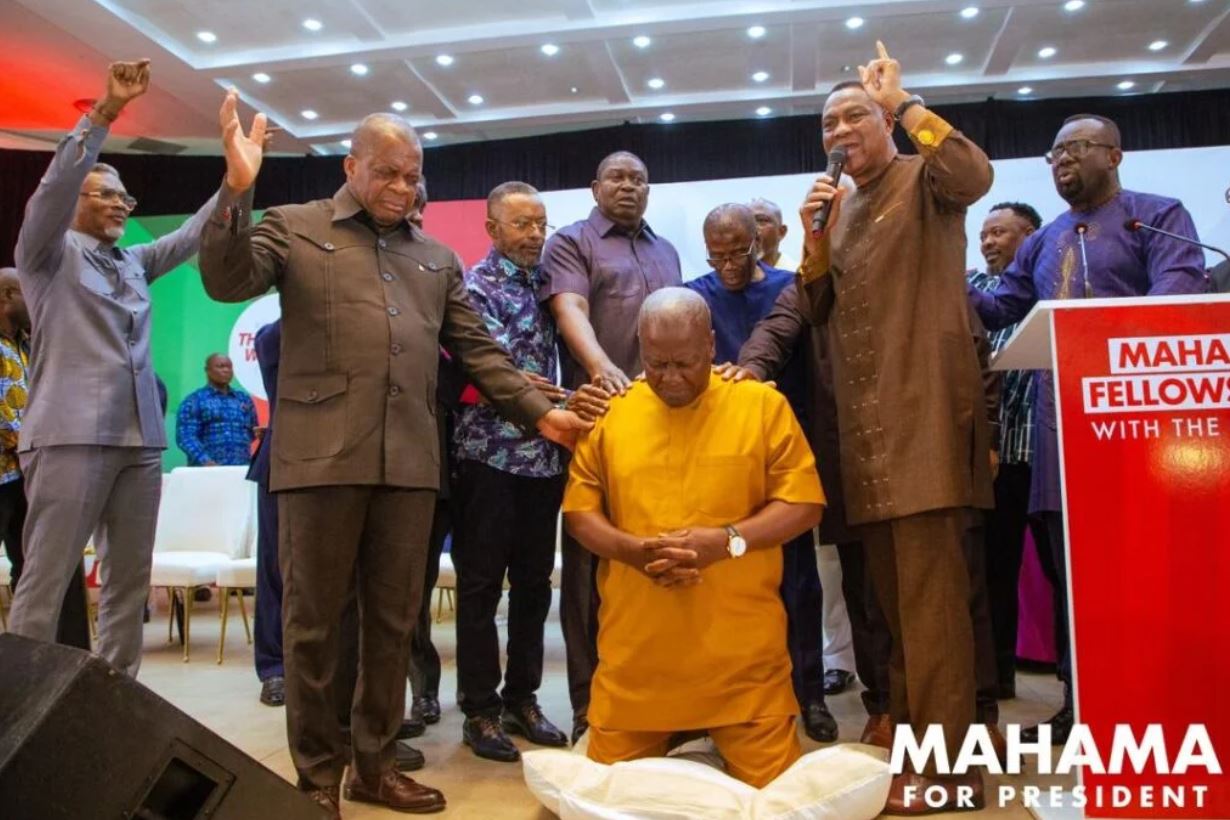
During a prayer session at Former President Mahama’s meeting with the clergy on October 1, 2024, in Ho, Rev. Bempah revealed, “While the prayer was ongoing, this is what God told me; because of his [Mahama’s] good heart, God has returned this country into his hands.”
The prophecy will sit well with supporters of the National Democratic Congress (NDC), but it could also lead to a debate among Ghanaians, who question the intersection of religion and politics.
Former President John Dramani Mahama has expressed his belief in his capability to lead Ghana again, vowing to steer the country “back on track” if he wins the December 2024 election.
“I understand that this task will not be an easy one, but I have unwavering faith in God’s ability to use me as a vessel to guide our nation through its current challenges.”
He underscored the valuable insight he has gained from both leading the nation and reflecting on his experiences after losing office.
Ghana presidential candidates confirmed by the EC.
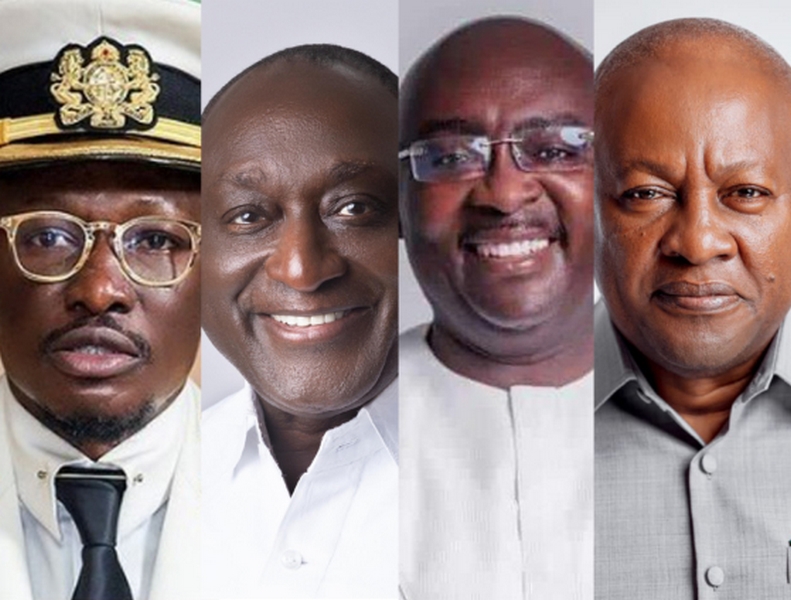
Ghana’s electoral commission published a list of 13 candidates approved to run in the presidential election, which analysts say will be a two-man race between Vice President Mahamudu Bawumia and former president John Dramani Mahama.
Voters in the West African gold- and cocoa-producing nation head to the polls on Dec. 7 to elect a successor to President Nana Akufo-Addo, who will step down in January after serving the constitutionally mandated eight years.
Former president Mahama, 65, represents the main opposition National Democratic Congress (NDC) party and Bawumia, a 60-year-old economist and former central banker, was picked by Akufo-Addo’s ruling New Patriotic Party as its candidate.
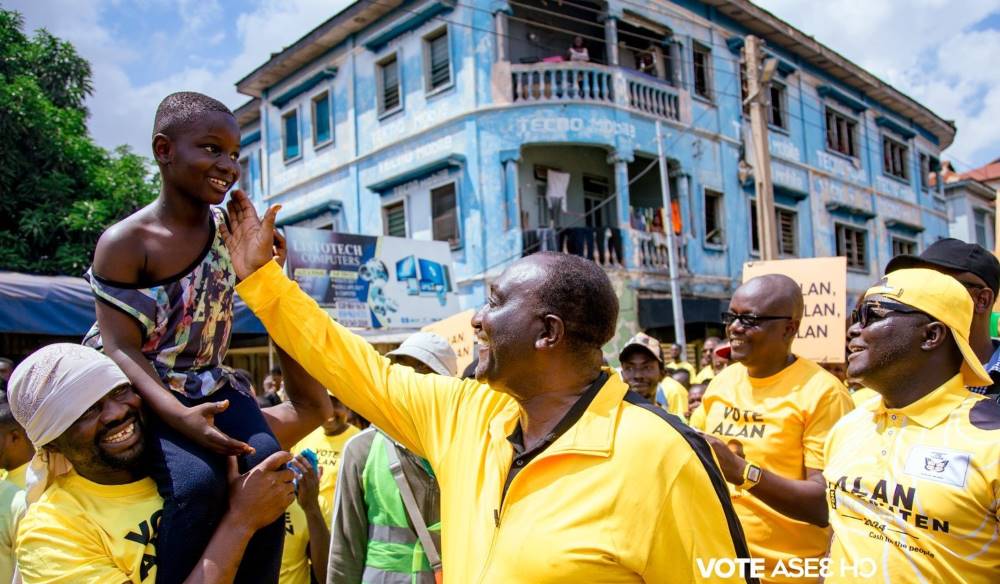
The commission said it had also accepted the candidacies of Alan John Kwadwo Kyerematen, a former trade and industry minister who resigned from the ruling party to stand as an independent, Nana Kwame Bediako, a businessman competing for the first time for the top job, and Nana Akosua Frimpomaa, one of two women in the race.
Mussa Dankwah from Accra-based research group Global InfoAnalytics said the list of qualified candidates was the longest in Ghana’s history.
“It just opens up the space but in practice, the votes are going to be among four candidates: Bawumia, Mahama, Kyerematen and Bediako. The rest, I don’t expect them to get more than one percent,” Dankwah told Reuters.
Some candidates from northern Ghana, including Bernard Mornah from an opposition party and Janet Nablah, an independent candidate, did not appear on the list.
Bright Simons, an analyst at Accra-based think tank IMANI, said that meant Bawumia’s and Mahama’s parties would be battling for “the soul of the North”.
Mahama’s NDC party held nationwide protests saying the electoral commission had illegally transferred voters to different voting stations without their knowledge.
The electoral commission said it would review a petition submitted by the party at the end of the demonstrations and provide a response in the coming days. It has previously said identified errors have been corrected.
The allegations add to growing public distrust in the electoral authority.
A July survey by pan-African research group Afrobarometer showed trust in Ghana’s electoral commission at an historic low since confidence polls started in 1999.
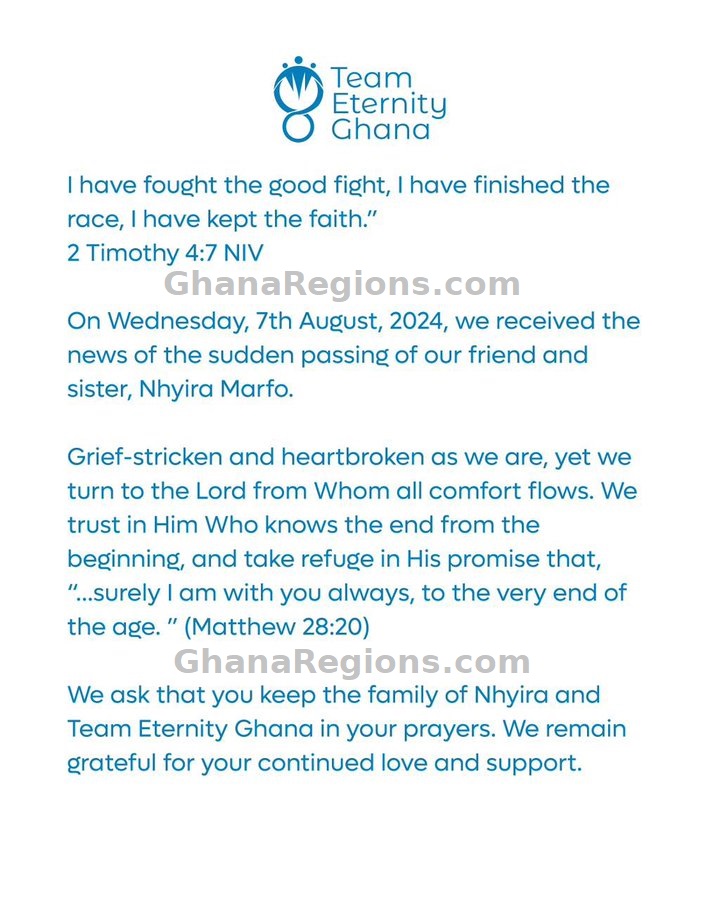
Ghanaian Gospel Musician Nhyira Marfo Okyere, the late member of Team Eternity, was reportedly poisoned, a social media influencer known as Quecy Official has alleged.
According to Quecy, he attended a concert by Team Eternity on Sunday where Nhyira Marfo Okyere performed and was looking in great health.
However, just a day later Marfo was dead, allegedly after coughing up blood.
Quecy Official said he heard that Okyere was allegedly poisoned although no one could tell if it was food poisoning or a more malicious form of poisoning.
His claim sparked reactions from netizens over the prevalence of people dying from poisoning in Ghana these days.
One person said: “Reasons we should be careful of what / where we eat ..”
Another added: “I am a victim of this food poisoning this just last Saturday I was poisoned through food vomited blood it took God for me to be here today,”
Currently, the family of Nhyira Marfo are yet to give any details about her official cause of death but the internet is already rife with the rumours of her alleged poisoning.
Meanwhile, another member of Team Eternity reportedly passed away in recent months.
Kevin Adiamah died a few months ago, according to a post from Team Eternity on Twitter.
“For those who don’t know, the song “Tribute” on the Testimony album was sung in honour of our beloved member Kevin Adiamah who we tragically lost while preparing for our album. He can be seen in this video,” a post from May they shared on X (formerly Twitter) read.Team Eternity Ghana Press Statement
Famous Soakat Singer, QueenLet completed her singing marathon, Sing-A-Thon at almost 125 hours on July 27, 2024 to break the current record holder Sunil Waghmare, an Indian who sang for 105 hours in 2012.
QueenLet breaks the current Sing-A-Thon record by Sunil Waghmare.
As the final moments of the Sing-a-thon approached, QueenLet looked exhausted as her singing marathon came to an end, a momentous surprise awaited her.
Just when QueenLet thought the day couldn’t get any more surreal, her manager phone rang, and to her disbelief, a familiar voice greeted her on the other end.
It was none other than a celebrity, Afia Schwarzengger, reaching out to congratulate her on her Sing-a-thon attempt and the courage it took to pursue such a remarkable goal.
The outpouring of love and support has indeed shocked QueenLet’s team and family, who told the media that these gestures helped her to keep singing throughout the Sing-A-Thon.
She want to say a very big thank to each and every one who participated in this sing-a-ton attempt from 21st July to 27th July 2024.
Defe Defe by Team Eternity Ghana, Kwame Micky, OFM Computer World
The dispute over copyright infringement between prominent Ghanaian music producer Kwame Mickey and the musical group Team Eternity has taken a surprising turn. Kwame Mickey accuses Team Eternity of stealing the hit song “Defe Defe” released 20 years ago.
OFM Computer World and Debrich Group of Companies, a multinational entity with operations in Ghana, Nigeria, and Europe, acting on behalf of Kwame Mickey, has served Team Eternity Ghana with a formal legal notice accusing them of copyright infringement.
The letter, sighted by Starr News, alleges that Team Eternity Ghana illegally manipulated and edited the original track to incorporate it into their own work without obtaining the copyright holders’ permission.
According to Debrich Group’s analyst and optimizer, this unauthorised editing and use of the original track constitute a clear case of copyright infringement. As a result, OFM Computer World, acting on behalf of the copyright owners, has formally requested that YouTube remove the video to prevent further unauthorised use and public exposure, and to protect the rights of the original creators.
The letter, signed under penalty of perjury by a representative of Debrich Group, categorically states that the music sampling used by Team Eternity Ghana was neither authorised by the copyright owner nor did it meet legal standards.
The notice includes a link to the original “DEFE DEFE” track by Hallelujah Voices, allowing recipients to compare the two works and understand the basis of the infringement claim.
The letter also indicates that Debrich Group is prepared to pursue legal action in the courts of Accra, Ghana, to protect their client’s rights, should the matter not be resolved amicably.
See letter below:
Defe Defe by Team Eternity Ghana, Kwame Micky, OFM Computer WorldDefe Defe by Team Eternity Ghana, Kwame Micky, OFM Computer World